
Content Menu
● Rifle Light vs Spotlight: The Essential Differences
● Why Independent Illumination Matters
>> A light should not force unnecessary firearm movement
>> Seeing reflected eyes is not positive identification
● Beam Performance: Compare More Than Lumens
>> Lumens describe total output
>> Candela describes peak beam intensity
>> Advertised beam distance is not identification distance
● Runtime: The Specification Buyers Often Misread
>> Battery duration and useful brightness are different
>> Updated testing distinguishes short-duration brightness
● Handling, Construction, and Ownership Costs
>> Mounted weight versus separately carried weight
>> Mounting compatibility needs specific answers
>> Purchase price is only part of the cost
● Three Evidence-Based Checks Before Buying
>> 1. Build a specification-matching sheet
>> 2. Assess visibility separately from firearm use
>> 3. Evaluate the product after initial brightness fades
● White, Red, or Green Light: Avoid Universal Promises
● Legal Checks: Lights and Lasers Are Not Interchangeable
● Which Light Deserves Priority?
>> Is a rifle light the same as a spotlight?
>> Is a handheld spotlight safer for general observation?
>> How many lumens are needed for coyote hunting?
>> Does advertised beam distance show identification range?
>> Is a green light always better than a white light?
>> Can a laser sight replace an illumination light?
>> What support does RichFire® provide?
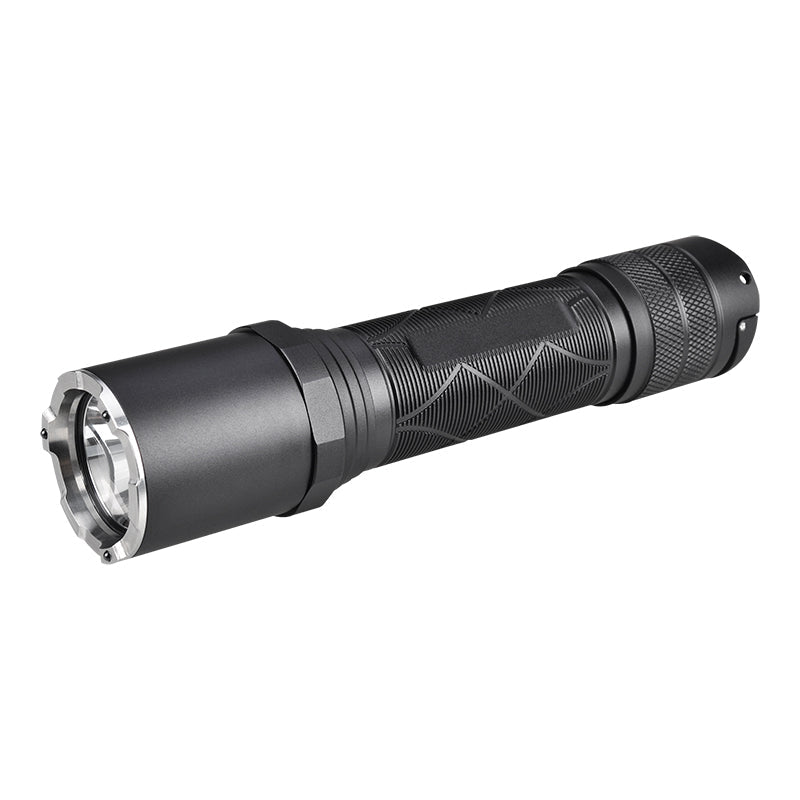
Choosing a rifle light vs spotlight for coyote hunting starts with a distinction: a rifle light describes where a light mounts, while a spotlight describes its concentrated beam. A rifle-mounted light can produce a spotlight beam, and a handheld spotlight can provide illumination without moving a firearm.
For general observation and searching, a separate handheld light offers an important safety advantage: its beam moves independently of the muzzle. A rifle-mounted light serves a different, more restricted role where firearm use and artificial lighting are lawful.
At RichFire®, our perspective draws on 12 years of experience with high-performance tactical lights, weapon lights, and laser aiming products, including product design, precision manufacturing, and demanding testing. Our buying principle is clarity: compare verified performance, practical limitations, and safety—not simply the largest brightness number.

Rifle Light vs Spotlight: The Essential Differences
For this comparison, “rifle light” means a compact firearm-mounted light. “Spotlight” means a separate handheld light designed around a concentrated beam.
These are practical categories, not fixed performance classes. Actual specifications matter more than the product name.
| Comparison factor | Rifle-mounted light | Separate handheld spotlight |
|---|---|---|
| Main distinction | Attaches to a firearm | Operates independently |
| Beam pattern | Depends on reflector and optics | Usually emphasizes a concentrated central beam |
| Observation flexibility | Beam direction follows firearm orientation | Beam can move without moving a firearm |
| Size and weight | Adds weight to the firearm | Adds separately carried weight |
| Power capacity | Often constrained by compact dimensions | Larger models may accommodate larger batteries |
| Controls | Mounted switches; some support remote switches | Usually body-mounted or handle-mounted controls |
| Compatibility concerns | Mounting interface, clearance, retention | Grip, carrying arrangement, charging system |
| Main purchasing question | Is its mounting and performance documentation adequate? | Does its beam and sustained output suit observation needs? |
Neither category automatically wins on brightness, durability, runtime, or value. A well-documented compact light can outperform a poorly specified larger product.
Why Independent Illumination Matters
A light should not force unnecessary firearm movement
The most consequential difference is not optical. It is directional independence.
Searching unfamiliar surroundings with a weapon-mounted beam also moves the muzzle. That makes a separate handheld light the appropriate tool for ordinary observation, checking equipment, navigating, or inspecting an uncertain object.
A mounted light does not replace a general-purpose flashlight. Keep firearm handling separate from routine lighting tasks, and follow established muzzle-discipline and trigger-discipline rules.
Seeing reflected eyes is not positive identification
An eye reflection reveals reflected light. It does not establish species, surroundings, property boundaries, or what lies beyond an animal.
Likewise, a brighter beam does not resolve every uncertainty. Distance, background contrast, obstructions, and weather can limit what the observer understands.
When identification or the surrounding area remains uncertain, the correct response is not to assume the light has supplied enough information.
Beam Performance: Compare More Than Lumens
Lumens describe total output
Lumens measure the total visible light a flashlight emits. They do not explain how tightly that light is concentrated.
Two products with similar lumen ratings can produce noticeably different beams. One may spread light broadly; another may concentrate more of its output into a smaller central area.
For a rifle light vs handheld spotlight comparison, lumens are useful—but incomplete.
Candela describes peak beam intensity
Candela measures intensity in the strongest part of the beam.
A higher candela rating generally indicates a more intense central beam, assuming comparable measurement methods. It does not automatically mean a wider view, better color recognition, or more comfortable observation.
Compare these specifications together:
-
Lumens for total output.
-
Candela for peak intensity.
-
Beam profile for the distribution of light.
-
Sustained-output information for performance over time.
-
Test conditions for a fair comparison.
A product listing that provides only lumens leaves important questions unanswered.
Advertised beam distance is not identification distance
The FL 1 beam-distance convention uses an illuminance threshold of 0.25 lux. That is a standardized comparison point, not a promise that an observer can reliably identify an animal at the advertised distance.
Real-world identification requires more than light reaching an object.
For that reason, avoid treating a long-distance claim as a verified identification range. Ask how the figure was measured and whether the manufacturer supplies supporting candela data.

Runtime: The Specification Buyers Often Misread
Battery duration and useful brightness are different
A multi-hour runtime does not necessarily mean a light maintains its initial output for that entire period.
For conventional operating modes under the FL 1 method, runtime extends until output falls to 10% of the initial measured value. A light can therefore remain within its stated runtime while becoming substantially dimmer.
For purchasing decisions, an output-over-time graph is often more informative than a single runtime number.
Ask:
-
Which operating mode produced the runtime claim?
-
Does output decline gradually or step down?
-
What battery and ambient conditions were used?
-
Is sustained output documented separately from maximum output?
Updated testing distinguishes short-duration brightness
FL 1-2025 includes a separate approach for short-duration elevated-brightness modes.
These modes use an early measurement window and a different runtime endpoint from conventional modes. Consequently, a brief maximum-output claim should not be compared directly with another product’s sustained operating mode.
This matters when comparing a compact rifle light with a larger spotlight: headline figures may describe different kinds of performance.
Handling, Construction, and Ownership Costs
Mounted weight versus separately carried weight
A rifle light adds its own weight, plus any mount and accessory controls, to the firearm. A spotlight carries its weight separately.
Neither arrangement eliminates weight; it changes where the user carries it.
Compare complete configurations rather than light bodies alone. Published dimensions, battery weight, and accessory requirements help prevent surprises after purchase.
Mounting compatibility needs specific answers
“Universal” is not a substitute for an identified mounting interface.
Before purchasing a rifle-mounted light, confirm compatibility with the relevant equipment and follow the manufacturer’s instructions. Do not assume that a supplied mount establishes suitability for every firearm or application.
Useful documentation includes:
-
Supported mounting interfaces.
-
Installation instructions and limitations.
-
Published impact and environmental ratings.
-
Applicable recoil-testing information.
-
Replacement-part availability.
An impact-resistance rating and a recoil-related claim address different conditions. One should not silently substitute for the other.
Purchase price is only part of the cost
Compare the cost of the complete package.
Batteries, chargers, mounts, cables, replacement switches, and spare components can affect long-term value. Proprietary accessories may also limit replacement options.
RichFire® offers a 30-day return period and a two-year warranty. Buyers should review the applicable terms, exclusions, and return conditions before ordering, especially where compatibility remains uncertain.
Three Evidence-Based Checks Before Buying
1. Build a specification-matching sheet
Create a side-by-side comparison using the same operating conditions wherever possible.
| Information to request | Why it matters |
|---|---|
| Lumens and candela for the same mode | Prevents mixing unrelated maximum figures |
| Beam-distance test method | Explains the basis of the distance claim |
| Output-over-time graph | Reveals sustained performance |
| Battery specification | Makes runtime comparisons meaningful |
| Environmental test details | Clarifies what durability claims cover |
| Included accessories | Shows the actual package cost |
If a specification is missing, mark it “not supplied.” Do not interpret missing information as proof of either good or poor performance.
2. Assess visibility separately from firearm use
A light can be evaluated without attaching it to a firearm.
Where lawful and safe, compare illumination on stationary, non-animal objects in a controlled setting. Keep the conditions consistent and avoid directing beams toward roads, homes, people, or animals.
Record whether details remain distinguishable, whether nearby objects create distracting brightness, and whether output changes during the observation period.
This is a visibility check—not a shooting-distance test or a substitute for certified performance measurements.
3. Evaluate the product after initial brightness fades
An impressive first impression can conceal weak sustained performance.
Review manufacturer data for what happens after activation, not just at activation. Also examine charging instructions, replacement-battery availability, and support procedures.
From a product-evaluation perspective, a transparent specification sheet and accessible support can be more valuable than an unsupported “extreme distance” claim.
White, Red, or Green Light: Avoid Universal Promises
Buyers frequently encounter claims that a particular light color is always best for coyote hunting.
Treat absolute claims cautiously. Color alone does not establish usable brightness, identification quality, or how every animal will respond.
Do not assume that:
-
A colored beam is invisible to coyotes.
-
Equal advertised lumens mean equal visual performance across colors.
-
A filter preserves the original light’s output.
-
One color removes the need for positive identification.
Request specifications for the actual color configuration being sold. If a seller claims a behavioral advantage, ask for evidence specific to that claim rather than relying on repeated marketing language.
Legal Checks: Lights and Lasers Are Not Interchangeable
Nighttime hunting permission does not automatically authorize every lighting device.
Applicable rules can distinguish between handheld lights, firearm-mounted lights, vehicle use, infrared equipment, and laser aiming devices. Restrictions may also depend on species, season, licensing, and location.
Pennsylvania provides a useful example: its published furbearer guidance permits certain gun-mounted lights that do not project a laser-light beam. That distinction shows why “light” and “laser” should never be treated as interchangeable legal categories.
Before purchasing equipment for a particular hunting activity, verify:
-
Current rules for the species and location.
-
Permitted hunting hours and seasonal restrictions.
-
Artificial-light and mounted-equipment provisions.
-
Vehicle-related restrictions.
-
Licensing, permission, and land-access requirements.
Consult the current wildlife authority rather than relying solely on a retailer’s summary.
Which Light Deserves Priority?
For someone choosing a first general-purpose observation light, prioritize independent illumination and clear performance documentation.
A separate spotlight can serve observation needs without making the firearm the lighting tool. A rifle-mounted light is a specialized accessory, not a replacement for that independent light.
If you already own a suitable handheld light, assess any additional purchase against a defined need. Avoid buying a second device merely because its maximum lumen number is higher.
Explore RichFire® tactical lights and weapon-light options with a specification checklist in hand. Ask our team about documented output, compatibility, included accessories, and support terms before ordering. Choose a product whose capabilities are explained—not merely advertised.

Frequently Asked Questions
Is a rifle light the same as a spotlight?
No. “Rifle light” describes mounting, while “spotlight” describes a concentrated beam. Some rifle lights produce spotlight-style beams. This article compares firearm-mounted lights with separate handheld spotlights.
Is a handheld spotlight safer for general observation?
It allows the beam to move independently of a firearm. That makes it the appropriate choice for routine searching, navigation, and inspection without unnecessary muzzle movement. Safe use still requires attention to surroundings.
How many lumens are needed for coyote hunting?
There is no universal lumen requirement. Lumens alone cannot establish identification capability. Beam intensity, distribution, sustained output, environmental conditions, and legal restrictions must also be considered.
Does advertised beam distance show identification range?
No. Standardized beam distance uses a defined illumination threshold. It does not certify that an observer can identify an animal or understand its surroundings at that distance.
Is a green light always better than a white light?
No universal advantage should be assumed. Evaluate the actual configuration, available performance data, visibility requirements, and evidence behind any claimed animal-response benefit.
Can a laser sight replace an illumination light?
No. A laser aiming point does not illuminate the surrounding scene or establish identification. Lasers may also face restrictions different from those applying to ordinary lights.
What support does RichFire® provide?
RichFire® offers a 30-day return period and a two-year warranty. Review the applicable policy terms and confirm product compatibility before purchase.
References
1. ANSI. “ANSI/PLATO FL 1-2025: Flashlight Basic Performance Standard.” Standard scope covering light output, beam distance, peak intensity, runtime, impact resistance, and protection against water and dust. https://webstore.ansi.org/standards/ansi/ansiplatofl2025
2. Streamlight. “Guide to Choosing the Right Flashlight.” Manufacturer guidance explaining lumens, candela, batteries, and flashlight selection. https://www.streamlight.com/resources/learning-left/guide-to-choosing-the-right-flashlight
3. Streamlight. “ANSI/PLATO FL 1 Standard.” Technical presentation explaining the 0.25-lux beam-distance threshold and conventional runtime measurement. https://www.streamlight.com/docs/default-source/ansi-documents/ansi-pres.pdf
4. Portable Lights American Trade Organization. “ANSI/PLATO FL 1-2025: Getting the Testing Right,” October 4, 2026. Explanation of conventional and short-duration elevated-brightness testing. https://plato-usa.org/ansi-plato-fl-1-2025-getting-the-testing-right/
5. Pennsylvania Game Commission. “Furtaking.” Official guidance distinguishing permitted gun-mounted lights from devices projecting a laser-light beam. Check current regulations before hunting. https://www.pa.gov/content/dam/copapwp-pagov/en/pgc/documents/hunttrap/law/digestfurtaker.pdf
6. Police1. “Clarifying the Issues Surrounding Gun-Mounted Lights,” March 22, 2005. Professional safety commentary supporting a separate flashlight for ordinary illumination; used here for general safety principles, not hunting law. https://www.police1.com/police-products/firearms/accessories/articles/clarifying-the-issues-surrounding-gun-mounted-lights-IZ6gmscUg8onMVgX/
Hot Tags: Coyote Hunting Lights, Rifle Lights, Hunting Spotlights, Weapon Lights, Tactical Flashlights, Gun Mounted Lights, Handheld Spotlights, Predator Hunting Lights, Green Hunting Lights, Rechargeable Hunting Lights