
Content Menu
● High-Lumen Flashlight vs Strobe Flashlight: The Essential Differences
● How a High-Lumen Flashlight Supports Personal Safety
>> Continuous Light Helps You Assess Your Surroundings
>> More Lumens Do Not Automatically Mean Better Performance
>> Maximum Output Is Not Always the Most Useful Setting
● What a Strobe Flashlight Can—and Cannot—Do
>> Strobe Is a Feature, Not a Guaranteed Defensive Outcome
>> Flashing Changes Your Own Viewing Experience
>> Photosensitivity Is a Genuine Safety Concern
● Beyond Lumens: Three Specifications That Matter More Than Marketing
>> 1. Candela Explains Beam Concentration
>> 2. Runtime Does Not Necessarily Mean Full-Brightness Runtime
>> 3. Controls Determine Whether Features Are Actually Useful
● A Useful Industry Example: One Flashlight Can Offer Both Modes
● How to Evaluate a Tactical Flashlight Safely Before Carrying It
>> Step 1: Inspect the Product and Instructions
>> Step 2: Check Steady-Light Operation
>> Step 3: Review the Interface
>> Step 4: Assess Everyday Practicality
● Handheld Flashlights vs Weapon Flashlights: Keep Their Roles Separate
● Which Flashlight Should You Choose for Personal Safety?
● Choose a RichFire® Flashlight Around Your Actual Needs
>> Is a Strobe Flashlight Better Than a High-Lumen Flashlight for Self-Defense?
>> How Many Lumens Does a Self-Defense Flashlight Need?
>> Can a Flashlight Reliably Blind an Attacker?
>> Does Strobe Always Save Battery Power?
>> Can Strobe Lights Trigger Seizures?
>> Should I Choose a Handheld or Weapon-Mounted Flashlight?
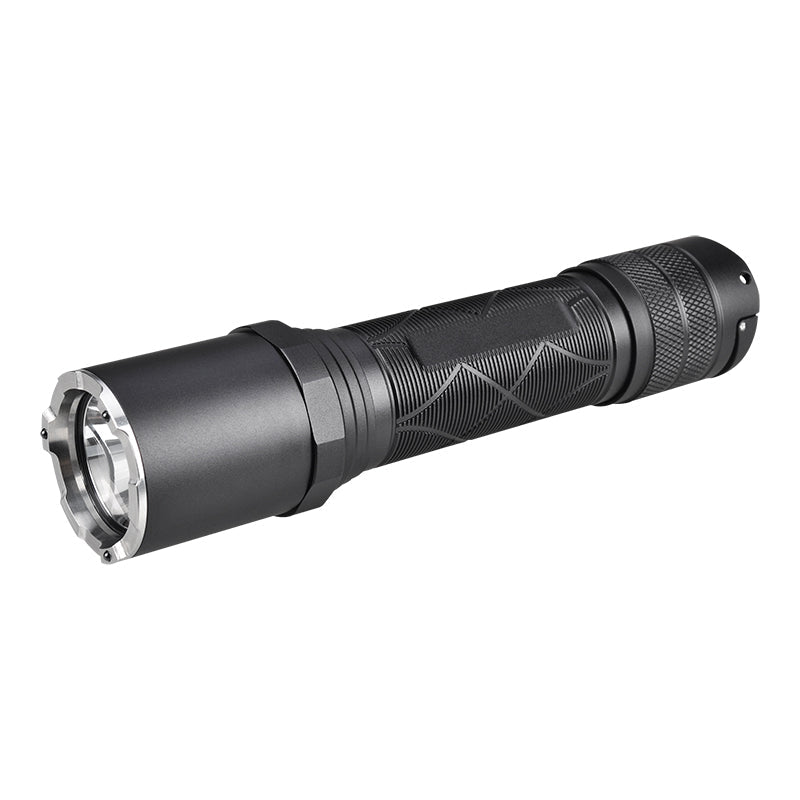
Choosing a high-lumen flashlight vs strobe flashlight for self-defense starts with an important distinction: lumens describe light output, while strobe describes a flashing mode. They are not competing technologies. A well-designed tactical flashlight can offer both.
For most everyday safety needs, our recommendation is to prioritize visibility: a useful steady beam, predictable controls, and dependable power. Treat strobe as an optional feature—not a guaranteed way to stop a threat.
At RichFire®, we bring 12 years of experience in high-performance tactical lights, weapon flashlights, and laser aiming devices, supported by experience in product design, precision manufacturing, and rigorous testing. Our buying philosophy is straightforward: choose the light that helps you understand your surroundings, rather than the one with the most dramatic advertising.

High-Lumen Flashlight vs Strobe Flashlight: The Essential Differences
A high-lumen flashlight produces a relatively large amount of visible light. However, “high-lumen” is a descriptive label, not a universal threshold that guarantees defensive effectiveness.
A strobe flashlight repeatedly switches its light output on and off. Depending on the model, strobe may sit alongside high, medium, and low steady-light settings.
That makes this comparison primarily about how you use the light—not which product category you must buy.
| Comparison factor | High-output steady mode | Strobe mode |
|---|---|---|
| Light pattern | Continuous illumination | Repeated flashes |
| Main practical purpose | Observing surroundings and navigating | Intermittent signaling or attention-getting |
| Visual information | Uninterrupted while activated | Interrupted by dark intervals |
| Key specifications | Lumens, candela, beam profile, sustained output | Flash frequency, activation method, output, runtime |
| Main limitation | Excessive reflected light can reduce comfort | Flashing can interfere with viewing and affect sensitive people |
| Buying priority | Reliable access to a useful steady beam | Optional access without complicating normal operation |
Our practical conclusion: buy a capable flashlight first. Decide whether its strobe feature adds value second.
How a High-Lumen Flashlight Supports Personal Safety
Continuous Light Helps You Assess Your Surroundings
A steady beam provides continuous illumination while you examine a path, locate a doorway, or check an unfamiliar sound from a safe position.
This matters because personal safety depends on recognizing what is happening. An obstacle, another pedestrian, and an actual emergency require different responses.
A flashlight cannot make those decisions for you. It can help you obtain the visual information needed to make them.
For everyday carry, we would favor straightforward steady-light access over an elaborate menu of flashing patterns.
More Lumens Do Not Automatically Mean Better Performance
Lumens measure total light output. They do not describe how tightly that light is concentrated.
A broad beam spreads illumination across a larger area. A narrower beam concentrates more light into a smaller region. Both can be useful, but their strengths differ.
For example, a broad beam may suit a nearby walkway. A more concentrated beam may help illuminate something farther away.
The best flashlight for personal safety therefore depends on beam distribution as well as brightness. A larger number on the packaging cannot resolve that choice alone.
Maximum Output Is Not Always the Most Useful Setting
Very bright light reflected from nearby walls, glass, or pale surfaces may make viewing uncomfortable. A lower setting can be more practical for close tasks.
Choose a light with usable output levels rather than assuming maximum brightness should remain active continuously.
Our preference is a controllable beam that suits the environment, with higher output available when needed.
What a Strobe Flashlight Can—and Cannot—Do
Strobe Is a Feature, Not a Guaranteed Defensive Outcome
Some manufacturers describe strobe as suitable for signaling or disorienting. That description should not be confused with a promise that it will stop an aggressive person.
The sources supporting this comparison do not establish a universal flash frequency, lumen level, or exposure duration that reliably stops an attacker.
Avoid purchasing decisions based on claims such as “instant incapacitation” or “guaranteed temporary blindness.” Product specifications measure light performance, not a predictable human response during a confrontation.
A flashlight should support awareness and a safe departure—not encourage confrontation.
Flashing Changes Your Own Viewing Experience
A strobe produces alternating light and dark intervals. That means your surroundings are not continuously illuminated in the same way they are under a steady beam.
Before choosing a strobe-equipped flashlight, consider a simple usability question: can you immediately return to steady illumination?
A flashing mode that is difficult to exit can become a distraction. We would not trade dependable normal operation for a more complicated defensive feature.
Photosensitivity Is a Genuine Safety Concern
Flashing lights can trigger seizures in some people with photosensitive epilepsy.
The Epilepsy Foundation reports that approximately 3% of people with epilepsy experience photosensitivity. It also identifies roughly 5–30 flashes per second as a commonly triggering range, although sensitivity varies.
This percentage refers to people with epilepsy—not the general population.
Do not deliberately test strobe on people, crowds, or anyone with known photosensitivity. Medical risk is a reason for restraint, not evidence that flashing light is a reliable defensive tool.

Beyond Lumens: Three Specifications That Matter More Than Marketing
1. Candela Explains Beam Concentration
Candela describes luminous intensity in a particular direction. A flashlight’s peak candela figure generally describes the strongest part of its beam.
Consider a documented example: Streamlight lists two lighting modes on its Dualie 2AA at the same 115-lumen output. The spot mode is rated at 3,100 candela, while the flood mode is rated at 75 candela.
The lumen figures match, but the beam characteristics differ substantially.
This illustrates why comparing high-lumen flashlights by output alone can mislead buyers. Always examine candela and beam shape together.
2. Runtime Does Not Necessarily Mean Full-Brightness Runtime
A long runtime figure does not automatically mean a flashlight maintains its advertised maximum output for that entire period.
Streamlight’s explanation of its referenced FL 1 standard defines runtime as the interval from the initial measurement until output drops to 10% of that initial value.
That endpoint matters. Two flashlights can advertise similar runtimes while delivering different brightness levels during use.
Ask for:
-
The operating mode used for the runtime claim.
-
The battery type and capacity.
-
An output-versus-time graph, if available.
-
Information about automatic output reduction.
For practical buying decisions, sustained performance is more informative than a peak number viewed in isolation.
3. Controls Determine Whether Features Are Actually Useful
A specification sheet cannot tell you whether a switch feels intuitive in your hand.
Check whether the flashlight starts in a predictable mode, whether it remembers the previous setting, and whether accessing strobe requires cycling through normal brightness levels.
Momentary activation and constant-on operation are also different functions. Understand which one the switch provides.
Our selection principle is simple: the feature you can reliably access is more valuable than the feature you struggle to find.
A Useful Industry Example: One Flashlight Can Offer Both Modes
The “high-lumen versus strobe” framing can imply an unnecessary either-or decision.
For example, Streamlight’s Stinger DS LED HL lists an 800-lumen high mode alongside medium, low, and strobe modes. The same product provides steady illumination and flashing output.
Its published high-mode runtime and strobe runtime also differ. That does not make one mode universally superior; it shows why each mode needs its own specifications.
When comparing RichFire® products—or any other brand—look at the exact model and setting. Do not assume every tactical flashlight shares the same controls, beam, or runtime.
This model-level approach produces a more useful comparison than choosing by category name.
How to Evaluate a Tactical Flashlight Safely Before Carrying It
The following checklist is a product-usability assessment, not a confrontation drill.
Step 1: Inspect the Product and Instructions
Read the operating guide. Confirm the battery requirements, charging instructions, and warnings.
Inspect the lens, switches, battery compartment, and charging-port cover where applicable. Do not use damaged batteries or improvise incompatible replacements.
Step 2: Check Steady-Light Operation
In a safe location, illuminate an unoccupied surface or clear path.
Evaluate the beam’s width, central intensity, and nearby reflections. Compare lower and higher settings without directing the beam into anyone’s eyes.
The goal is to understand what the light lets you see.
Step 3: Review the Interface
Practice switching on, switching off, and selecting steady brightness levels.
If the product includes strobe, first understand its activation and exit sequence from the instructions. Avoid activating it around other people or anyone who could be photosensitive.
Step 4: Assess Everyday Practicality
Check whether the flashlight fits comfortably in its intended pocket or carrying position.
Ask yourself:
-
Can I retrieve it without fumbling?
-
Can I identify the switch by touch?
-
Is normal illumination easy to select?
-
Is the charging routine realistic for me?
-
Will I actually carry it?
A light left at home cannot help illuminate your route.
Handheld Flashlights vs Weapon Flashlights: Keep Their Roles Separate
RichFire® sells weapon flashlights, but a weapon-mounted light should not replace a handheld flashlight for ordinary observation.
Using a firearm-mounted light to inspect an everyday object can also direct the firearm toward that object or person. That creates a fundamentally different safety problem from using a handheld light.
For routine navigation and general visibility, choose a suitable handheld flashlight.
If you purchase a weapon light, evaluate compatibility and follow the firearm and light manufacturers’ instructions. Seek qualified safety instruction. A laser aiming device does not replace general illumination or safe handling.
This distinction matters more than whether the light includes strobe.
Which Flashlight Should You Choose for Personal Safety?
For most buyers, we recommend this order of priorities:
-
Reliable steady illumination.
-
A beam suited to your usual surroundings.
-
Predictable, accessible controls.
-
Documented output and runtime.
-
Practical battery maintenance.
-
Comfortable everyday carry.
-
Optional strobe that does not interfere with normal use.
Choose a high-lumen flashlight with strobe if both functions are useful to you and the interface remains simple.
Choose a steady-light model without strobe if that better matches your preferences. The absence of flashing output does not automatically make a flashlight unsuitable for personal safety.
Neither choice guarantees protection. Awareness, avoiding escalation, leaving unsafe situations, and contacting emergency services remain more important than a lighting mode.
Choose a RichFire® Flashlight Around Your Actual Needs
At RichFire®, our 12 years of experience inform a practical approach to tactical lighting: focus on product suitability, clear specifications, and dependable operation.
Before ordering, ask our team to confirm the selected model’s lumen output, candela, beam profile, activation sequence, battery requirements, and available performance documentation.
Our store offers a 30-day return period and a two-year warranty. Review the applicable policy details before purchasing.
Explore RichFire® tactical flashlights and choose the model that fits your daily environment—not simply the one advertising the highest output or most dramatic strobe.

Frequently Asked Questions
Is a Strobe Flashlight Better Than a High-Lumen Flashlight for Self-Defense?
Not inherently. Strobe is a flashing mode; lumens measure output. A single flashlight may offer both. Prioritize useful steady illumination and reliable controls rather than assuming strobe provides superior protection.
How Many Lumens Does a Self-Defense Flashlight Need?
There is no universal lumen figure that guarantees safety or stops a threat. Consider beam intensity, beam width, surrounding light, controls, and sustained output together.
Can a Flashlight Reliably Blind an Attacker?
Do not rely on that outcome. Bright light can cause glare, but a product’s lumen rating does not establish predictable incapacitation. Avoid deliberately exposing eyes during product testing.
Does Strobe Always Save Battery Power?
No universal rule applies. Runtime depends on the light’s electronics, flashing pattern, output, and battery. Compare the manufacturer’s mode-specific figures instead of assuming strobe always lasts longer.
Can Strobe Lights Trigger Seizures?
Yes, in susceptible people. Flash frequency, brightness, and viewing conditions can affect risk. Avoid exposing people to strobe during demonstrations or casual testing.
Should I Choose a Handheld or Weapon-Mounted Flashlight?
For everyday navigation and general observation, choose a handheld flashlight. Weapon-mounted lights have a separate role and require appropriate compatibility checks, safe handling, and qualified instruction.
References
1. Streamlight. “ANSI Information.” Manufacturer explanation of light output, peak beam intensity, runtime measurement, and voluntary standards participation. https://www.streamlight.com/resources/learning/ansi-information
2. Streamlight. “Dualie® 2AA: Product Fact Sheet.” Published example comparing equal-lumen spot and flood modes with different candela ratings. https://www.streamlight.com/docs/default-source/fact-sheet/291.pdf?sfvrsn=905aa4f0_17
3. Streamlight. “Stinger DS LED HL® Flashlight.” Product specifications documenting steady-light settings, strobe, output, and mode-specific runtime. https://www.streamlight.com/products/detail/stinger-ds-led-hl
4. Epilepsy Foundation. “Photosensitivity and Seizures.” Medical guidance on photosensitivity prevalence among people with epilepsy and commonly triggering flash frequencies. https://www.epilepsy.com/what-is-epilepsy/seizure-triggers/photosensitivity
5. Epilepsy Action. “Photosensitive Epilepsy.” Additional guidance explaining individual variation and factors influencing sensitivity to flashing light. https://www.epilepsy.org.uk/info/seizure-triggers/photosensitive-epilepsy
Hot Tags: Tactical Flashlight, Self-Defense Flashlight, High-Lumen Flashlight, Strobe Flashlight, EDC Flashlight, Rechargeable Tactical Flashlight, High-Powered Flashlight, LED Flashlight, Weapon Light, Best Flashlight For Self-Defense