
Content Menu
● What Makes an EDC Flashlight Suitable for Professional Use?
● Five Professions That Benefit From an EDC Flashlight for Work
>> 1. IT Technicians: Controlled Light for Cables and Equipment Labels
>> 2. Home Inspectors: Adjustable Lighting for Changing Inspection Distances
>> 3. Maintenance Technicians: Hands-Free Lighting With Environmental Fit
>> 4. Night Security Guards: Predictable Controls and Useful Outdoor Visibility
>> 5. Mechanics: Close-Range Coverage and Flexible Positioning
● EDC Flashlight Selection Table: Match Features to the Job
● How to Compare Flashlight Specifications Without Being Misled
>> Read Maximum Output Alongside Mode and Runtime Information
>> Treat Beam Coverage as a Task Requirement
>> Verify Protection Claims Separately
● A Five-Step Workplace Flashlight Evaluation
>> Step 1: Define Three Everyday Jobs
>> Step 2: Test Your Normal Working Mode
>> Step 3: Check Controls and Carry Together
>> Step 4: Confirm Your Power Routine
>> Step 5: Document Limitations
● Handheld EDC Flashlights vs. Weapon Flashlights
● Choose Your Next Work Light With RichFire®
>> What Is an EDC Flashlight for Work?
>> How Many Lumens Do I Need for a Work Flashlight?
>> Is a Rechargeable Flashlight Better Than a Replaceable-Battery Model?
>> Can a Tactical Flashlight Be Used for Maintenance Work?
>> Should I Carry a Backup Flashlight?
>> Can a Weapon-Mounted Light Replace My Everyday Carry Flashlight?
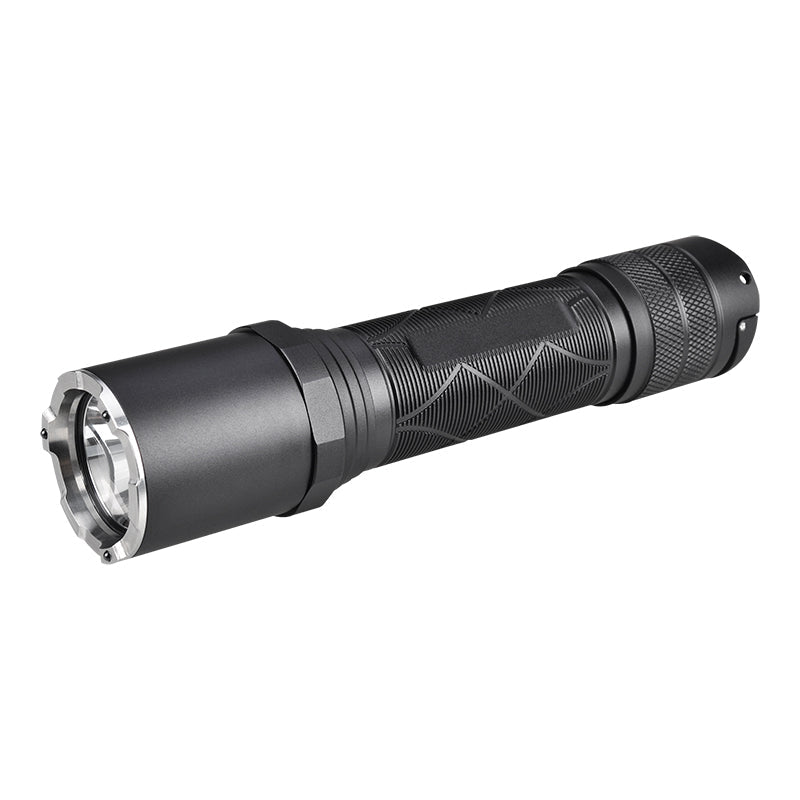
An EDC flashlight for work should do more than produce an impressive burst of light. It should help you read a cable label, inspect a dark corner, identify an obstacle, or finish a repair without fighting awkward controls. For IT technicians, home inspectors, maintenance teams, security guards, and mechanics, the right everyday carry light starts with the task—not the highest advertised brightness.
At RichFire®, we bring 12 years of experience selling high-performance tactical lights, weapon flashlights, and laser sights, supported by experience in product design, precision manufacturing, and rigorous testing. Our approach to work lighting is straightforward: choose equipment around visibility, dependable operation, and the environment where it will actually be used.
This guide explains what each profession needs, which specifications deserve attention, and how to evaluate a flashlight before making it part of your daily kit.

What Makes an EDC Flashlight Suitable for Professional Use?
“EDC” means everyday carry. In a professional setting, that usually means a light compact enough to remain accessible throughout the shift.
However, pocket size alone does not make a flashlight useful.
A technician working behind a cabinet needs controlled close-range illumination. A security guard checking an outdoor perimeter needs visibility farther ahead. A mechanic may need both hands free while directing light around obstructions.
Start with three questions:
-
What must I see clearly?
-
How long will I need useful illumination?
-
What could make this light unsuitable for my workplace?
The most valuable specification is the one that solves your actual problem. A higher maximum output cannot compensate for poor beam coverage, uncomfortable carry, or controls you cannot operate while wearing gloves.
Five Professions That Benefit From an EDC Flashlight for Work
1. IT Technicians: Controlled Light for Cables and Equipment Labels
Server racks, equipment cabinets, and under-desk installations often leave important details in shadow.
For an IT technician, a useful pocket flashlight should make connector labels and cable routes readable without requiring repeated repositioning.
Prioritize:
-
A low setting for close inspection.
-
A broad, even beam.
-
A pocket clip that stays secure.
-
Controls that are easy to locate by touch.
-
A practical battery or charging arrangement.
Picture a cable-management task behind a crowded cabinet. The problem is not necessarily insufficient maximum brightness. It is getting light onto the correct connector without your hand or the cabinet frame blocking the beam.
A small headlamp or adjustable work light can complement a handheld flashlight when both hands are needed. Check whether any advertised hands-free feature actually works with your clothing, headwear, and normal working position.
2. Home Inspectors: Adjustable Lighting for Changing Inspection Distances
Home inspection involves frequent transitions between close details and larger spaces.
An inspector might examine a plumbing connection, illuminate an attic corner, and photograph a questionable surface during the same visit. One fixed brightness setting is unlikely to suit every task.
Look for:
-
Several useful output levels.
-
Balanced coverage for scanning.
-
Sufficient reach for larger spaces.
-
Comfortable one-handed operation.
-
A backup lighting option.
For inspection photography, test the light with your actual camera or phone. Strong reflections and uneven illumination can make a visible defect harder to document.
A practical evaluation is simple: illuminate the same surface from several angles and compare the resulting images. Choose the position that reveals detail without washing it out.
A flashlight supports observation. It does not replace inspection training, appropriate access procedures, or specialized measuring equipment.
3. Maintenance Technicians: Hands-Free Lighting With Environmental Fit
Maintenance work can involve machinery, utility spaces, and equipment interiors where a handheld light becomes inconvenient.
An adjustable head, stable clip, or magnetic base may help position illumination without occupying a hand. However, attachment features should be evaluated rather than assumed reliable.
Before relying on a mounting option, check:
-
Whether the mounting surface is suitable.
-
Whether vibration could move the light.
-
Whether the beam remains directed at the task.
-
Whether the light interferes with equipment or access.
-
Whether workplace procedures permit that placement.
Environmental suitability comes first. A general-purpose tactical flashlight should not be treated as approved equipment for a hazardous classified location simply because it is rugged or water-resistant.
Where flammable gases, vapors, or combustible dust may be present, equipment selection must match the location’s classification and applicable requirements. Confirm suitability with the responsible safety professional before use.
4. Night Security Guards: Predictable Controls and Useful Outdoor Visibility
For night security work, a flashlight helps with routine observation, navigation, and checking poorly illuminated areas.
The most useful features are often operational:
-
A switch that is easy to find.
-
Predictable access to the intended brightness.
-
Secure carry during walking and bending.
-
Useful beam coverage at patrol distances.
-
A realistic power plan for the shift.
Test the controls while wearing your usual gloves. Confirm what happens after the light is switched off, because mode memory and startup behavior can affect daily usability.
Avoid selecting a light primarily for dramatic features. Strobe modes, aggressive styling, or high peak output do not establish that a flashlight is suitable for your assignment.
Use lighting in accordance with employer procedures. A flashlight supports observation; it does not replace training, communication, or safe decision-making.
5. Mechanics: Close-Range Coverage and Flexible Positioning
Mechanics often need to illuminate recessed components while working around hoses, brackets, and other obstructions.
A broad beam and adjustable position can be more useful than a narrow spot aimed directly at the work area.
Consider:
-
A compact inspection light for restricted access.
-
An adjustable head for directing illumination.
-
A secure hands-free mounting option.
-
Moderate settings for reflective surfaces.
-
Cleaning instructions appropriate to workshop use.
Try the light at the position where your hands and tools will actually be. A beam that looks excellent before work begins may become blocked once you reach into the assembly.
Do not assume water resistance also means resistance to fuel, solvents, or cleaning chemicals. Check the manufacturer’s stated limitations and remove damaged equipment from service under your workplace procedures.

EDC Flashlight Selection Table: Match Features to the Job
Use this table to build a shortlist, rather than treating any single feature as a complete purchasing decision.
| Profession | Main lighting challenge | Features to prioritize | Practical check |
|---|---|---|---|
| IT technician | Labels and connectors in confined spaces | Low mode, even beam, compact carry | Read small labels at normal working distance |
| Home inspector | Frequent changes in distance and surface | Adjustable output, balanced coverage | Inspect and photograph the same surface |
| Maintenance technician | Hands-free positioning around equipment | Stable attachment, adjustable direction | Verify mounting and environmental suitability |
| Security guard | Observation during low-light patrols | Predictable controls, useful reach, secure carry | Operate with gloves and normal duty clothing |
| Mechanic | Shadows around recessed components | Broad coverage, flexible positioning | Check illumination with hands and tools in place |
The shared priority is usability: light delivered where you need it, through controls and carry methods that fit your work.
How to Compare Flashlight Specifications Without Being Misled
Read Maximum Output Alongside Mode and Runtime Information
Maximum lumens describe a light-output claim, not the complete working experience.
Compare the output and runtime of the mode you expect to use most often. Also check whether the highest setting is a brief boost mode rather than a sustained operating level.
For example, some commercially available tactical flashlights explicitly list a turbo duration of only seconds, alongside much longer runtimes at lower settings. That distinction matters more than comparing headline numbers alone.
When available, request output-over-time information. Ask whether runtime includes declining brightness and what conditions were used during testing.
Treat Beam Coverage as a Task Requirement
Two flashlights can feel very different in use even when their advertised output appears similar.
For close inspection, examine how much of the work area receives usable illumination. For larger spaces, check whether the beam reveals the details you need at the required distance.
Use a realistic test location. A beam demonstrated against a nearby white wall does not necessarily show how it will perform behind equipment or across an outdoor yard.
Verify Protection Claims Separately
Water resistance, impact resistance, chemical compatibility, and hazardous-location suitability are different questions.
Do not allow one reassuring label to answer all four.
Check the documentation for the exact model. Where workplace approval is required, confirm the relevant markings and suitability rather than relying on words such as “professional” or “tactical.”
A Five-Step Workplace Flashlight Evaluation
Before committing to a light, create a repeatable evaluation using safe, representative tasks.
Step 1: Define Three Everyday Jobs
Choose tasks you perform regularly: reading a label, checking a recessed component, or inspecting a distant doorway.
Write down what “good visibility” means for each task.
Step 2: Test Your Normal Working Mode
Evaluate the brightness level you would realistically leave on. Do not judge the entire product by its brightest moment.
Record whether you can see the required detail comfortably.
Step 3: Check Controls and Carry Together
Operate the light with your normal gloves and clothing.
Check whether the clip snags, the switch activates accidentally, or the light becomes uncomfortable when sitting or bending.
Step 4: Confirm Your Power Routine
Decide when and where charging will happen. If the light uses replaceable batteries, follow the manufacturer’s instructions for compatible cells, storage, and replacement.
A charging connector is only useful if it fits your actual routine.
Step 5: Document Limitations
Note glare, mounting restrictions, awkward controls, and any unverified protection claims.
If comparing several lights for a team, use the same tasks and conditions. Consistent observations are more useful than unrelated impressions.
Handheld EDC Flashlights vs. Weapon Flashlights
A handheld work flashlight and a weapon-mounted light serve different purposes.
For ordinary workplace inspection, choose an independent handheld light, headlamp, or suitable work light. Do not use a weapon-mounted light as a substitute for general illumination.
Similarly, a laser sight is not a work light. It does not provide the area illumination needed to inspect equipment, navigate a workspace, or identify surrounding hazards.
RichFire® offers products across these categories, but category boundaries matter. Select everyday work lighting for everyday work, and evaluate specialized equipment separately under the applicable training, rules, and intended use.
Choose Your Next Work Light With RichFire®
Start with your three most common lighting tasks. Then compare beam coverage, usable operating modes, controls, carry comfort, and documented environmental suitability.
RichFire® combines 12 years of category experience with a focus on product design, precision manufacturing, and rigorous testing. Store purchases are supported by a 30-day return period and a two-year warranty, subject to the applicable policy terms.
Explore RichFire® lighting options, or contact our team with your working distance, typical lighting duration, and preferred carry method. Ask for model-specific specifications before choosing the light that fits your work.

Frequently Asked Questions
What Is an EDC Flashlight for Work?
It is a portable light carried routinely for work-related tasks. The best fit depends on what you need to illuminate, how you carry it, and the conditions in which it will operate.
How Many Lumens Do I Need for a Work Flashlight?
There is no single number suitable for every profession. Evaluate adjustable output, beam coverage, and visibility at your normal working distance. Close inspection and outdoor observation require different lighting characteristics.
Is a Rechargeable Flashlight Better Than a Replaceable-Battery Model?
Neither is automatically better. Rechargeable lights suit users with dependable charging access. Replaceable-battery models may suit other routines. Compare compatible batteries, charging requirements, and your backup plan.
Can a Tactical Flashlight Be Used for Maintenance Work?
Potentially, if its beam, controls, operating modes, and documented environmental suitability fit the task. Tactical styling alone does not establish workplace suitability or hazardous-location approval.
Should I Carry a Backup Flashlight?
Consider one when losing your primary light would interrupt essential work or leave you without adequate visibility. The backup should remain accessible and have its own reliable power arrangement.
Can a Weapon-Mounted Light Replace My Everyday Carry Flashlight?
No. Keep an independent light for ordinary illumination. Weapon-mounted lights are specialized equipment and should not be used as general-purpose inspection tools.
References
1. Fenix Lighting — “5 Professions That Need to Carry an EDC Light,” April 12, 2021. Source for the original five-profession framework and examples of occupation-specific lighting needs. The rewritten article does not reproduce its model recommendations or imply independent product testing.
2. Occupational Safety and Health Administration — 29 CFR 1910.307: Hazardous (Classified) Locations. Source for hazardous-location classifications, equipment suitability, and approval requirements. This is a U.S. regulatory reference; local requirements may differ.
3. Occupational Safety and Health Administration — 29 CFR 1910.334: Use of Equipment. Background reference for electrical-equipment handling and environmental suitability. Its portable-equipment provisions specifically address cord-and-plug-connected equipment and should not be presented as universal battery-flashlight rules.
4. Energizer — 3000XT-R Rechargeable Tactical LED Flashlight. Concrete example of separately listed operating modes: the product table specifies a 10-second boost/turbo mode and longer runtimes at lower outputs. Included to illustrate specification-reading, not to recommend a competing product.
Hot Tags: EDC Flashlight, Best EDC Flashlight, Rechargeable Flashlight, Tactical Flashlight, LED Flashlight, Pocket Flashlight, Work Flashlight, Compact Flashlight, Rechargeable Work Light, Everyday Carry Flashlight