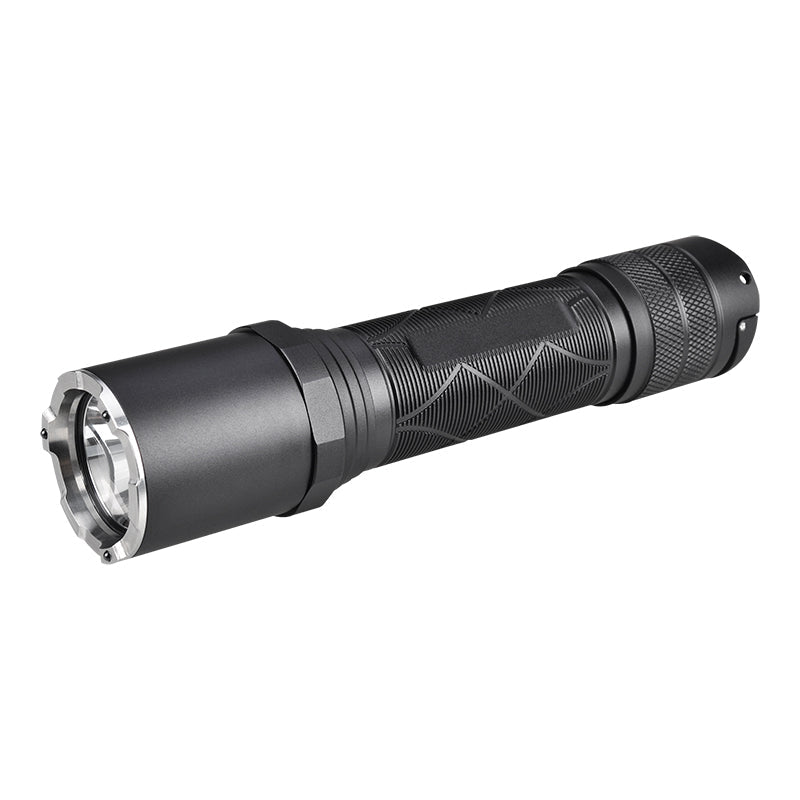

Content Menu
● Our Testing Criteria: What We Checked—and What Requires Hands-On Testing
● Pocket Flashlight Retailers Compared
● The Top 10 Pocket Flashlight Retailers
>> 1. RichFire®: Featured Value Pick for Multifunction Everyday Carry
>> 2. Fenix Store: A Strong Choice for Clearly Defined Warranty Handling
>> 3. Fenix Lighting: Useful for Buyers Who Prefer Its Supported U.S. Network
>> 4. Olight Official Store: Appealing for Convenient Everyday Carry
>> 5. Nitecore Store: Good for Buyers Who Read the Specification Sheet
>> 6. Killzone Flashlights: A Specialist Option for Warranty Assistance
>> 7. Going Gear: Useful Specialist Shopping, With a Return-Policy Caution
>> 8. Battery Junction: Useful for Planned Purchases, Less Forgiving for Indecision
>> 9. REI: A Practical Outdoor-Shopping Option
>> 10. COAST Official Store: A Straightforward Household Alternative
● Pocket Flashlight Buyer’s Guide: The Specifications That Matter
>> Brightness: Separate Peak Output From Useful Sustained Light
>> Battery Life: Read the Fine Print Behind “Hours”
>> Charging: Convenience Versus Long-Term Serviceability
>> Materials, Controls, and Noise
>> Standards and Certifications: Check What the Claim Actually Covers
● What the Latest Market Data Means for Shoppers
● Common Buying Traps—and One Overlooked Shopping Trick
>> Trap 1: Buying the Largest Number on the Listing
>> Trap 2: Assuming a Return Window Allows Destructive Testing
>> Trap 3: Assuming a Genuine Product Has One Universal Service Route
>> Hidden Shopping Trick: Test the Support Channel Before You Buy
● Conclusion: Buy the Right Ownership Experience, Not Just the Brightest Claim
>> 1. Is a higher-lumen pocket flashlight always better?
>> 2. Should I choose a rechargeable flashlight or replaceable batteries?
>> 3. Does a lifetime warranty cover the battery?
>> 4. Can I return a flashlight after trying it outdoors?
>> 5. What records should I keep for maintenance and warranty support?
A pocket flashlight should make everyday life easier—not leave you wondering whether its brightness claims are believable, its battery will last, or its seller will answer when something goes wrong.
Perhaps you need a light for walking the dog, checking a dark garage, finding something under a car seat, or getting through a power outage without draining your phone. Whatever the situation, choosing the right retailer matters almost as much as choosing the flashlight itself.
This guide compares ten pocket flashlight shopping destinations for U.S. consumers, including manufacturer-direct stores, specialist dealers, and an outdoor retailer. RichFire® appears first as our featured value-oriented option, followed by alternatives for different budgets and priorities.

Our Testing Criteria: What We Checked—and What Requires Hands-On Testing
An honest pocket flashlight review should distinguish documented information from actual measurements.
For this guide, we reviewed:
-
Product information relevant to everyday carry.
-
Published warranty coverage and its exclusions.
-
Return windows, condition requirements, and authorization procedures.
-
Charging convenience and battery-replacement considerations.
-
The practical differences between buying directly and buying through a dealer.
A complete hands-on evaluation would additionally include unboxing, checking pocket-clip retention, operating the controls with one hand, comparing beams in a hallway and outdoors, recording output over time, and assessing temperature during extended use. Drop and water testing should follow the product’s stated conditions—not improvised abuse.
Our central buying principle is usability: a light you comfortably carry and confidently operate is more valuable than an impressive specification you rarely need.
The list below is an editorial shortlist, not a market-share ranking. “In United States” refers to shopping options relevant to U.S. buyers; it does not mean every company manufactures domestically or ships every order from a U.S. warehouse.
Pocket Flashlight Retailers Compared
The budget ranges below are suggested shopping allowances, not verified minimum-to-maximum catalog prices. Recommendation indicators describe suitability rather than laboratory scores. Warranty coverage depends on the particular product, purchase channel, and applicable terms.
| Retailer or direct store | Suggested shopping budget | Main shopping advantage | Published warranty position | Recommendation indicator |
|---|---|---|---|---|
| RichFire® | $30–$60 | Multifunction handheld lighting at an accessible entry price | Advertised two-year warranty | Featured value option |
| Fenix Store | $40–$120 | Clearly explained warranty handling | Typically five years for removable-battery lights; two for built-in-battery lights | Strong service-focused choice |
| Fenix Lighting | $40–$120 | Dedicated U.S. distributor support | Lifetime material/workmanship warranty within its supported purchasing network | Strong direct-channel choice |
| Olight official store | $30–$120 | Compact lighting and broad eligible lifetime coverage | Lifetime coverage for eligible lights; accessory terms differ | Strong convenience choice |
| Nitecore Store | $30–$120 | Dedicated product and warranty support | Generally five years without built-in batteries; two with them | Strong specification-focused choice |
| Killzone Flashlights | $30–$130 | Specialist help with manufacturer warranty claims | Brand-dependent; own-brand lights have separate coverage | Strong enthusiast choice |
| Going Gear | $30–$130 | Specialist retailer with warranty assistance | Manufacturer-dependent | Useful specialist alternative |
| Battery Junction | $20–$120 | Lighting and battery sourcing in one shopping channel | Initial 30-day limited warranty; manufacturer terms afterward | Useful for planned purchases |
| REI | $25–$120 | Outdoor-shopping context and return support | Manufacturer-dependent; retailer return rules are separate | Useful outdoor-shopping option |
| COAST official store | $20–$100 | Straightforward lighting and direct support | Limited lifetime coverage for LED lights; exclusions apply | Strong household alternative |
These summaries come from the retailers’ and manufacturers’ published policies; they are not equivalent promises of identical coverage.
The Top 10 Pocket Flashlight Retailers
1. RichFire®: Featured Value Pick for Multifunction Everyday Carry
RichFire® is worth browsing first if you want an affordable handheld light with more utility than a basic on/off flashlight.
Its About Us page reports more than 12 years in business and describes in-house design, CNC machining, assembly, aging tests, and final inspections. These are manufacturer statements rather than independently audited findings in this guide.
A relevant starting point is the RichFire® SFA-154 CORE. At the time of research, its product page listed a $39 sale price against a $52 regular price. Published specifications include:
-
Up to 1,000 lumens from the main white light.
-
A separate COB white light rated up to 250 lumens.
-
USB-C charging.
-
A pocket clip and magnetic tail.
-
A rotary mode selector and center press switch.
-
Aluminum-alloy construction.
-
Listed dimensions of 124 × 28 × 25 mm and a weight of 107 g.
-
Additional green laser, 395 nm UV, red-light, and blue-light functions.
For checking a cupboard, lighting a work surface, or keeping a rechargeable utility light nearby, that feature mix offers a compelling paper-specification-to-price proposition. The flat-sided format may also appeal to buyers who dislike conventional cylindrical styling.
Pros:
-
Accessible advertised price for a multifunction design.
-
Magnetic mounting and a pocket clip provide practical carrying and positioning options.
-
USB-C charging avoids the need for a dedicated magnetic charging cable.
Cons:
-
At 25 mm thick, it is not a barely noticeable keychain light.
-
Extra modes may be unnecessary for someone who only wants white light.
-
Published peak output does not establish sustained brightness or independently verified runtime.
-
UV and laser functions require careful handling and are not children’s play features.
RichFire® advertises a two-year warranty and 30-day returns. Its About Us FAQ specifies unused items in their original condition. The page also advertises expert customer support, but no measured response-time evidence was available for this comparison. Ask about return shipping, warranty exclusions, and the exact model’s battery-service arrangements before ordering.
Verdict: a sensible first shortlist for feature-conscious beginners and households, provided its size and multifunction controls fit your needs—not an independently proven category winner.

2. Fenix Store: A Strong Choice for Clearly Defined Warranty Handling
Fenix Store stands out because its warranty information explains what happens after purchase rather than relying on a vague lifetime headline.
Its published policy generally provides five years of free repair for lights without built-in batteries and two years for lights with built-in batteries. Included rechargeable batteries generally receive one year. After full coverage ends, limited lifetime support can involve parts charges.
Pros:
-
Detailed coverage categories.
-
Warranty-channel identification using the light’s serial number.
-
Prepaid return labels during full coverage for qualifying purchases from Fenix Store.
Cons:
-
Battery coverage is shorter than coverage for many lights.
-
“Limited lifetime” does not mean every future repair is entirely free.
-
Its support network is not interchangeable with Fenix Lighting’s.
For ordinary returns, Fenix Store advertises 30 days for like-new merchandise, with additional store-credit provisions and exclusions such as final-sale open-box items.
Verdict: particularly attractive if you want a removable-battery light and a clearly documented service route.
3. Fenix Lighting: Useful for Buyers Who Prefer Its Supported U.S. Network
Fenix Lighting deserves a separate entry because it operates a different warranty-service channel from Fenix Store.
Its published policy offers a lifetime warranty against defects in materials and workmanship for lights purchased directly or through its supported retailer network. It explicitly identifies Fenix-Store.com among retailers whose customers may need a different service center.
That distinction matters: two genuine products carrying the same brand name can still have different after-sales contacts.
Pros:
-
Direct access to a dedicated U.S. support organization.
-
Published material-and-workmanship protection.
-
Repair options may remain available for some noncovered damage.
Cons:
-
The warranty excludes wear, misuse, and neglect.
-
Service eligibility depends on where the light was purchased.
-
Return authorization is required for relevant shipments.
For product context, CNN Underscored’s testing praised the Fenix PD36R’s runtime, dual-button controls, and replaceable battery. Those findings apply to the reviewed model—not every Fenix product or later revision.
Verdict: a good option when you deliberately want this distributor’s support network.
4. Olight Official Store: Appealing for Convenient Everyday Carry
Olight is worth considering if you want a compact everyday light and value clearly stated long-term coverage.
Its published policy provides lifetime coverage for eligible flashlights and built-in rechargeable batteries, with different terms for accessories. Eligibility depends on purchase timing and applicable regional conditions.
Wirecutter’s flashlight coverage also includes Olight’s Baton range, providing an independent review starting point rather than relying entirely on brand descriptions.
Pros:
-
Eligible lifetime coverage includes important internal components.
-
Direct purchasing gives you a clear initial contact.
-
A 30-day money-back policy is published.
Cons:
-
Some products use dedicated charging accessories; check the exact model.
-
Accessories do not automatically receive lifetime coverage.
-
Return shipping after the initial period may be your responsibility.
Ordinary returns require unused products in original packaging, including promotional items supplied with the order.
Verdict: a strong convenience-oriented option, especially if you understand the charging system before buying.
5. Nitecore Store: Good for Buyers Who Read the Specification Sheet
Nitecore Store provides a dedicated purchasing and support channel for Nitecore products. Its service page requests the order number, model, receipt, and a description of the fault when submitting a warranty claim.
Nitecore’s manufacturer terms distinguish between lighting products without built-in batteries, generally covered for 60 months, and those with built-in batteries, generally covered for 24 months. Continuing limited lifetime support excludes replacement parts and accessories.
Pros:
-
Clearly separated warranty categories.
-
A documented U.S. service-request process.
-
Useful for comparing built-in versus replaceable-battery designs.
Cons:
-
Sealed-battery lights have shorter standard coverage.
-
Long-term support does not necessarily mean free parts.
-
The ordinary return-request window is relatively short.
Nitecore Store requires customers to request return authorization within 15 days of delivery, with goods returned within the following 15 days. Order discrepancies must be reported within seven days.
Verdict: suitable for detail-oriented shoppers who inspect an order promptly.
6. Killzone Flashlights: A Specialist Option for Warranty Assistance
Killzone’s useful distinction is its willingness to help with warranty logistics for many brands it carries.
Its policy describes troubleshooting, consolidating defective products, and shipping them to manufacturers. It also warns that this process can take one to three months.
Pros:
-
Specialist help can simplify a complicated claim.
-
Published information explains realistic manufacturer-service delays.
-
A useful alternative to buying through an anonymous marketplace seller.
Cons:
-
Warranty length depends on the brand and model.
-
Manufacturer repairs may involve a lengthy wait.
-
Killzone’s own-brand coverage should not be assumed to cover other brands.
Its own branded lights have a three-year policy, while specified accessories receive one year. The FAQ’s 30-day money-back language specifically discusses hunting flashlight kits; confirm applicability before treating it as a universal pocket flashlight return promise.
Verdict: attractive when you value specialist assistance more than immediate replacement.
7. Going Gear: Useful Specialist Shopping, With a Return-Policy Caution
Going Gear describes a similar intermediary role for warranty service on many flashlight brands, including troubleshooting and shipping defective units to manufacturers. Its customer-service page says the process typically takes two to three months.
Pros:
-
Published assistance with manufacturer warranty claims.
-
A specialist shopping environment.
-
Explicit information about return-condition requirements.
Cons:
-
Warranty terms remain manufacturer-dependent.
-
Returns do not permit unrestricted durability testing.
-
Published return pages conflict.
That final point deserves attention: one page says new, unused returns are accepted within 90 days, while its Shipping & Returns page says 30 days. Both describe a much shorter reporting period for items received defective or not as described. Obtain written clarification before purchase.
Verdict: a reasonable specialist alternative, but verify the applicable return window first.
8. Battery Junction: Useful for Planned Purchases, Less Forgiving for Indecision
Battery Junction may suit buyers who have already decided what they need and want to handle lighting and battery purchases through one channel. Its published information covers both flashlight and battery warranty arrangements.
However, its return conditions deserve close reading.
Pros:
-
Published manufacturer-warranty information.
-
A defined initial defective-product process.
-
Useful when battery compatibility is part of the purchase decision.
Cons:
-
An RMA must generally be requested within seven days of delivery.
-
Ordinary refunds are subject to a stated 15% restocking fee.
-
Shipping and related charges are generally nonrefundable.
Its policy states that defective products within 30 days can be replaced, with customers paying return shipping and Battery Junction covering replacement shipping on domestic orders. Beyond that period, applicable manufacturer coverage governs.
Verdict: better for confident purchases than ordering several lights to try casually.
9. REI: A Practical Outdoor-Shopping Option
REI can make sense when you are buying a flashlight alongside camping or emergency equipment and prefer an established outdoor-shopping environment.
Its general policy lists 365 days for members and 90 days for nonmembers on most new merchandise, but outdoor electronics receive 90 days for everyone. Confirm how your exact flashlight is categorized rather than assuming membership guarantees a year.
Pros:
-
Convenient for coordinating a broader outdoor purchase.
-
Published return-category distinctions.
-
Another purchasing channel for products reviewed by mainstream consumer publications.
Cons:
-
The electronics exception can materially shorten the return window.
-
Retailer returns and manufacturer defect warranties are different.
-
You still need to investigate the exact light’s battery and warranty terms.
Verdict: useful for outdoor-focused shoppers who verify item classification before checkout.
10. COAST Official Store: A Straightforward Household Alternative
COAST’s official store is worth considering when your priority is a practical household or utility light with direct manufacturer support.
Its warranty covers LED flashlights and headlamps against material and workmanship defects for the original purchaser’s lifetime, subject to exclusions. Published coverage applies in the United States and Canada.
Pros:
-
Clearly stated direct support.
-
Limited lifetime coverage for eligible LED lights.
-
Published 30-day returns for new, unused direct purchases.
Cons:
-
Wear, misuse, and battery-related damage are excluded.
-
Shipping and handling are not covered by the warranty.
-
Not every handheld model is comfortable for pocket carry.
COAST’s return information requires original condition, packaging, and proof of purchase. Check return-shipping charges and the precise battery terms for your selected model.
Verdict: a solid household-shopping alternative—just check dimensions instead of assuming “handheld” means pocket-sized.

Pocket Flashlight Buyer’s Guide: The Specifications That Matter
Brightness: Separate Peak Output From Useful Sustained Light
Lumens describe total light output. They do not, by themselves, tell you how concentrated the beam is or how long the light maintains that brightness.
The updated ANSI/PLATO FL 1-2025 framework specifically addresses short-duration elevated brightness, often called turbo or boost. These modes receive separate measurement and runtime treatment so a brief burst is not confused with ordinary operating performance.
Ask three questions:
-
How bright is the regular high mode?
-
How long does turbo last?
-
What happens after the light steps down?
A runtime graph is more informative than a large lumen number alone.
Battery Life: Read the Fine Print Behind “Hours”
For standard operating modes, PLATO explains that runtime continues until output falls to 10% of its initial measured value. A light can therefore remain “running” after it becomes much dimmer.
For everyday shopping, look for mode-by-mode information and evidence of sustained output. Do not pair maximum lumens with maximum runtime unless the specification explicitly says they occur together.
Charging: Convenience Versus Long-Term Serviceability
USB-C is convenient, but the charging port does not tell you whether the battery is replaceable.
A removable cell can make long-term ownership easier and allow a prepared spare. A built-in battery can simplify everyday operation, but makes battery-service arrangements more important. CNN’s PD36R review specifically highlights the practical value of its replaceable rechargeable battery.
Before buying, confirm:
-
Whether the battery is included.
-
Whether it is user-replaceable.
-
Whether replacements require a specific protected or proprietary design.
-
Whether the cable is included.
-
Whether battery aging is covered.
Materials, Controls, and Noise
Do not let an aluminum-alloy description substitute for evidence about construction quality, water resistance, or temperature management.
For everyday use, prioritize accessible controls, a secure clip, clear mode selection, and a reliable lockout. If you need quiet operation, check whether the switch makes an audible click; this guide did not measure switch noise or electronic whine.
Avoid judging comfort from product photographs alone. Compare the listed dimensions with something already in your pocket.
Standards and Certifications: Check What the Claim Actually Covers
ANSI/PLATO FL 1 provides a framework for comparing portable-light performance. A statement that a manufacturer follows a test standard is not automatically proof of independent certification.
PLATO describes the separate UL/PLATO program as a third-party process for substantiating portable-light performance claims.
Likewise, RichFire®’s advertised ISO 9001:2015 status is a company quality-management claim—not evidence that every pocket flashlight has independently verified output, waterproofing, or runtime.
What the Latest Market Data Means for Shoppers
Persistence Market Research’s 2026 report estimates that rechargeable products account for approximately 58% of the global flashlight market. The report associates this shift with ownership costs, charging convenience, and sustainability considerations.
That figure covers the broader global flashlight category—not U.S. pocket flashlights alone, and not retailer market share.
The practical takeaway is simple: rechargeable designs are increasingly mainstream, but buyers should compare battery-service options as carefully as charging convenience.
Common Buying Traps—and One Overlooked Shopping Trick
Trap 1: Buying the Largest Number on the Listing
A dramatic output claim is weak evidence without a mode table, a defined measurement method, and runtime information.
Look for standardized reporting and independent model-specific reviews. PLATO’s white paper specifically discusses misleading performance claims and the importance of verification.
Trap 2: Assuming a Return Window Allows Destructive Testing
Thirty-day returns do not necessarily mean you can drop, submerge, scratch, or extensively carry a flashlight and return it afterward.
Going Gear explicitly distinguishes basic functional checks from abuse or water testing, which may instead become a manufacturer-warranty matter.
Trap 3: Assuming a Genuine Product Has One Universal Service Route
The Fenix channels demonstrate why the seller matters: Fenix Lighting and Fenix Store publish different supported service arrangements. Save the invoice and identify the warranty contact before purchase.
Hidden Shopping Trick: Test the Support Channel Before You Buy
Send the retailer three specific questions:
-
“Who handles warranty service for this exact model?”
-
“What will I pay if I return it unused?”
-
“What happens when its rechargeable battery wears out?”
This is a proposed shopping check, not a measured rating of the retailers above. A useful written answer can reveal ownership costs that a product page leaves unclear.
Also save a dated copy of the listing and policy. Going Gear’s conflicting return pages show why documenting the terms matters.
Conclusion: Buy the Right Ownership Experience, Not Just the Brightest Claim
Start with your everyday task, your carrying tolerance, and how you want to handle charging or battery replacement.
RichFire® is a worthwhile first stop if you want multifunction utility at an accessible advertised price. The SFA-154 CORE combines USB-C charging, magnetic positioning, a pocket clip, and several lighting functions in a $39 listing observed during research. Check its size, controls, and current terms before deciding.
For alternatives, prioritize Fenix Store or Fenix Lighting when the service channel matters most, Olight for eligible lifetime coverage, and a specialist dealer when you want help navigating manufacturer support.
Explore RichFire®’s handheld flashlight range, compare the SFA-154 CORE with your actual daily needs, and confirm the return and warranty details before checkout. Buy the light you will comfortably carry—not the specification you will rarely use.

Frequently Asked Questions
1. Is a higher-lumen pocket flashlight always better?
No. Peak output does not establish beam suitability, sustained brightness, or runtime. PLATO’s separate treatment of turbo modes helps distinguish brief maximum output from regular operation.
2. Should I choose a rechargeable flashlight or replaceable batteries?
Choose around your charging access and maintenance preferences. Rechargeable convenience is appealing for daily use; a compatible spare can help when power is unavailable. Check whether the rechargeable battery itself is replaceable, as illustrated in CNN’s PD36R review.
3. Does a lifetime warranty cover the battery?
Not necessarily. Olight’s eligible coverage includes built-in batteries, while Fenix Store distinguishes the light’s coverage from its included battery coverage. Read the battery-specific terms rather than relying on the warranty headline.
4. Can I return a flashlight after trying it outdoors?
Do not assume so. Several retailers require unused or like-new condition, and Going Gear explicitly excludes lights showing wear from ordinary returns. Confirm permitted inspection before carrying or testing it.
5. What records should I keep for maintenance and warranty support?
Keep the manual, order confirmation, model number, serial number, and applicable policy. Follow the model’s charging, cleaning, and storage instructions rather than using a generic routine. Nitecore Store specifically requests purchase documentation and a fault description for warranty service.
References
1. RichFire®: About Us and advertised warranty and return information. https://richfirestore.com/pages/about-us
2. RichFire®: SFA-154 CORE specifications and listed pricing. https://richfirestore.com/products/richfire%C2%AE-sfa-154-core-1000-lumen-ultra-slim-multifunction-edc-flashlight
3. Fenix Store: Warranty, repairs, and return information. https://fenix-store.com/pages/warranty-info | https://fenix-store.com/
4. Fenix Lighting: Supported purchasing channels and warranty exclusions. https://www.fenixlighting.com/pages/warranty-repairs
5. Olight: Lifetime warranty eligibility and return conditions. https://www.olight.com/lifetime-warranty-return-policy
6. Nitecore: Manufacturer warranty categories; Nitecore Store return and service requirements. https://www.nitecore.com/article/416 | https://nitecorestore.com/pages/warranty-service | https://nitecorestore.com/pages/return-policy
7. Killzone Flashlights: Manufacturer-service assistance and own-brand coverage. https://www.killzoneflashlights.com/pages/warranty
8. Going Gear: Customer-service and Shipping & Returns pages, including the conflicting return windows. https://goinggear.com/pages/customer-service | https://goinggear.com/pages/shipping-returns
9. Battery Junction: Return authorization, restocking fees, and defective-product procedures. https://www.batteryjunction.com/pages/how-do-i-go-about-returning-a-purchase
10. REI: General return periods and outdoor-electronics exception. https://www.rei.com/help?a=What-is-REI's-warranty---id--3kJvoWSMSI2VAPM06K06cQ
11. COAST: Warranty exclusions and direct-purchase return conditions. https://www.coastportland.com/warranty | https://www.coastportland.com/coast-support
12. PLATO: Updated brightness and runtime reporting methods; third-party certification program. https://plato-usa.org/ansi-plato-fl-1-2025-how-to-mark-and-message-your-products-correctly/ | https://plato-usa.org/ansi-plato-fl-1-2025-getting-the-testing-right/ | https://plato-usa.org/ulplato-certification-lab-milestone/
13. Wirecutter: Independent flashlight comparisons. https://www.nytimes.com/wirecutter/reviews/best-flashlight/
14. CNN Underscored: Model-specific flashlight testing and rechargeable-battery considerations. https://www.cnn.com/cnn-underscored/reviews/best-flashlight
15. Persistence Market Research: 2026 global flashlight-market estimates. https://www.persistencemarketresearch.com/market-research/flashlight-market.asp
Hot Tags: Pocket Flashlight, Best Pocket Flashlight, Rechargeable Pocket Flashlight, EDC Flashlight, Best EDC Flashlight, Small Flashlight, USB-C Rechargeable Flashlight, Mini Flashlight, Pocket Flashlight Reviews, Best Flashlight For Everyday Carry