
Content Menu
● What Makes the Best Rechargeable Flashlight?
● Lumens, Candela, and Beam Distance: Know the Difference
>> Lumens Measure Total Light Output
>> Candela Describes Beam Intensity
>> Advertised Beam Distance Has Limits
● Why Sustained Brightness Matters More Than Turbo Output
>> Maximum Output Is Not Continuous Output
>> Read Runtime Claims Carefully
● A Real Example: Why Flashlight Model Versions Matter
● Choose the Best Rechargeable Flashlight for Your Use
>> Best Rechargeable Flashlight for Everyday Carry
>> Best Rechargeable Flashlight for Outdoor Use
>> Best Rechargeable Flashlight for Emergencies
● USB-C Charging and Battery Compatibility
>> USB-C Does Not Automatically Mean Fast Charging
>> Replaceable Batteries Need More Than a Size Match
● Durability: Read the Conditions Behind the Claim
● How to Evaluate Your Flashlight During the Return Period
● What Customer Reviews Can—and Cannot—Tell You
● Handheld Flashlights and Weapon Flashlights Are Different Categories
● Rechargeable Flashlight Care and Charging Safety
● Find a Rechargeable Flashlight That Fits Your Needs
>> What is the best rechargeable flashlight for everyday use?
>> How many lumens should a rechargeable flashlight have?
>> Does a longer runtime mean longer full-brightness operation?
>> Can I use any USB-C charger?
>> Is a tactical flashlight suitable for weapon mounting?
>> What support does RichFire® offer?
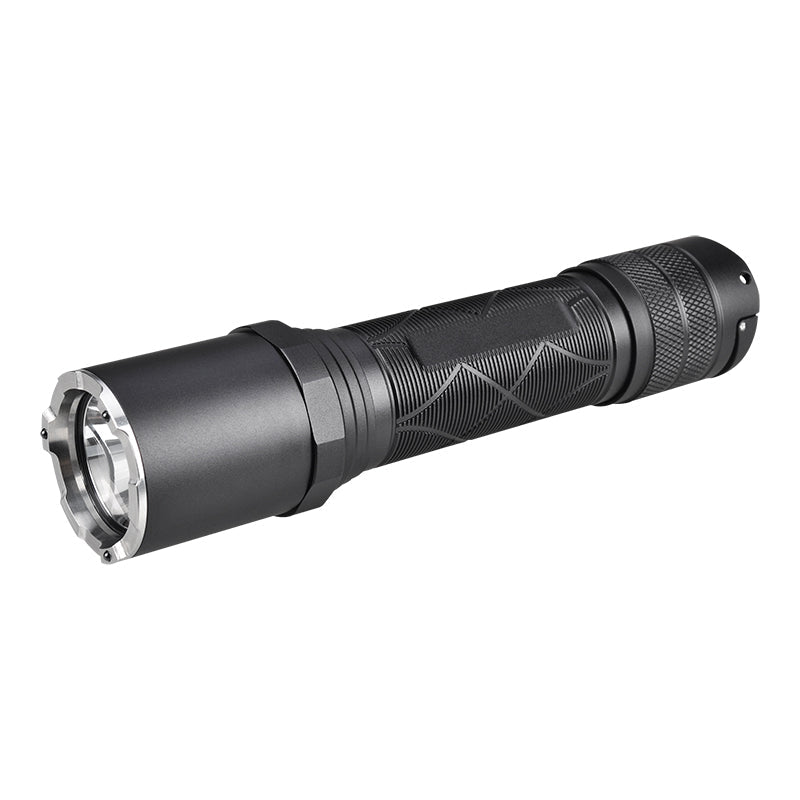
The best rechargeable flashlight is the one that delivers dependable light for your actual needs—not simply the highest lumen number. Whether you need an everyday carry flashlight, a rechargeable tactical flashlight, or reliable illumination during a power outage, beam quality, sustained output, battery compatibility, and controls matter together.
At RichFire®, our perspective comes from 12 years of experience with high-performance tactical lights, weapon flashlights, and laser sights, supported by experience in product design, precision manufacturing, and rigorous testing. Our approach to choosing a flashlight is straightforward: start with the task, examine the evidence, and select features you will genuinely use.
This guide explains how to compare rechargeable flashlights without confusing impressive specifications with practical performance.

What Makes the Best Rechargeable Flashlight?
A good rechargeable flashlight balances several requirements:
-
Enough illumination for the intended task.
-
A beam pattern suited to the working distance.
-
Useful brightness throughout the required operating period.
-
Controls that remain convenient during regular use.
-
A compatible battery and practical charging system.
-
Clearly documented durability and after-sales support.
There is no universal winner. A compact pocket light and a larger outdoor flashlight solve different problems.
For everyday use, portability may outweigh maximum output. For extended inspections, sustained brightness becomes more important. For emergency storage, predictable operation and a clear battery-maintenance routine deserve priority.
Start by asking: “Where will I use this light, for how long, and how will I recharge it?”
Lumens, Candela, and Beam Distance: Know the Difference
Lumens Measure Total Light Output
Lumens describe the total visible light emitted by a flashlight. They help compare output, but they do not tell you exactly where that light goes.
A wide beam can illuminate a broad area nearby. A more concentrated beam can direct light toward a smaller area farther away.
Two flashlights with similar lumen ratings may therefore feel very different in use.
Avoid choosing by lumens alone. Examine beam photographs, operating modes, and independent measurements when available.
Candela Describes Beam Intensity
Candela measures luminous intensity in a particular direction. Peak candela helps describe the intensity of the brightest part of the beam.
This matters when comparing a broad flood beam with a concentrated beam designed for longer distances.
For close-range household tasks, a comfortable spread of light may be more useful than a very intense hotspot. For observing distant surroundings, greater beam intensity may be preferable.
Advertised Beam Distance Has Limits
Standardized flashlight beam distance uses a threshold of 0.25 lux. That is a measurement endpoint, not a guarantee that you can clearly identify every object at the advertised distance.
Rain, haze, background lighting, contrast, and the size of an object affect practical visibility.
Treat beam distance as a comparison tool. Do not interpret it as a promise of detailed visibility under every condition.
Why Sustained Brightness Matters More Than Turbo Output
Maximum Output Is Not Continuous Output
A rechargeable flashlight may reach its highest brightness briefly, then reduce output as heat builds or battery conditions change.
This reduction, commonly called step-down, can be part of normal thermal management.
The important question is not only “How bright does it get?” It is also “How much useful light remains after several minutes?”
For inspections, outdoor walks, and extended work, a stable medium or high mode can be more valuable than a spectacular but short-lived turbo setting.
Read Runtime Claims Carefully
Under the commonly used FL 1 runtime definition, runtime extends until output falls to 10% of its initial measured value.
Consequently, a stated runtime does not necessarily mean the flashlight maintains its starting brightness for that entire period.
Look for:
-
The brightness mode associated with the runtime.
-
Any warning about thermal or voltage-related reductions.
-
A runtime graph showing output over time.
-
Test conditions, including the battery used.
Consistency is often the most useful performance characteristic for longer tasks.
A Real Example: Why Flashlight Model Versions Matter
The original Fenix PD36R provides a useful example of how specifications should be interpreted. Its advertised maximum output was 1,600 lumens, with a beam distance of 283 meters and a maximum runtime of 115 hours in its lowest brightness mode.
Those figures describe different operating conditions. They should not be combined into a claim that the flashlight delivers 1,600 lumens for 115 hours.
An independent test of the original model also recorded declining turbo output rather than continuous maximum brightness.
The later PD36R V2.0 is a different version, advertised at 1,700 lumens and a 396-meter beam distance. Its charging instructions and specifications should not be applied automatically to the original model.
When comparing any rechargeable flashlight, confirm the full model name, version, battery, and operating mode. Similar names do not guarantee identical performance.

Choose the Best Rechargeable Flashlight for Your Use
| Intended use | Features to prioritize | What to check before buying |
|---|---|---|
| Everyday carry | Comfortable size, secure clip, convenient low mode | Dimensions, weight, pocket fit, accidental activation prevention |
| Household emergencies | Simple controls, useful lower modes, charging access | Battery maintenance instructions and mode-specific runtime |
| Outdoor walking | Balanced beam, practical runtime, weather protection | Sustained output and documented water-resistance conditions |
| Inspection work | Close-range beam quality and predictable operation | Glare, controls, and brightness after extended use |
| Tactical equipment selection | Appropriate construction and clearly documented compatibility | Whether the product is handheld or specifically designed for mounting |
Best Rechargeable Flashlight for Everyday Carry
For everyday carry, choose a flashlight you will comfortably keep with you.
Check whether the clip suits your clothing, whether the body feels bulky, and whether the switch can activate accidentally inside a pocket.
A useful low mode deserves attention. Maximum brightness is not always comfortable for nearby tasks, especially when light reflects from pale surfaces.
Best Rechargeable Flashlight for Outdoor Use
For outdoor walking, compare how the beam illuminates both the path and surrounding space.
A narrow hotspot may reach farther but provide less nearby coverage. A wider beam may be comfortable for walking while offering less distant intensity.
Consider your usual route rather than buying for an exceptional situation you rarely encounter.
Best Rechargeable Flashlight for Emergencies
For emergency use, simplicity matters.
Choose controls that other household members can understand. Keep the charging cable accessible, follow the recommended maintenance schedule, and avoid relying exclusively on the highest-output mode.
If uninterrupted lighting is important, consider a separate backup light rather than assuming one rechargeable device will cover every eventuality.
USB-C Charging and Battery Compatibility
USB-C Does Not Automatically Mean Fast Charging
USB-C describes a connector. It does not, by itself, establish charging speed, supported power input, or compatibility with every adapter.
Check the flashlight’s instructions for:
-
Recommended charging equipment.
-
Expected charging time.
-
Required input specifications.
-
Charging indicator behavior.
-
Whether operation while charging is permitted.
A familiar connector is convenient, but the product’s documented charging requirements remain the deciding factor.
Replaceable Batteries Need More Than a Size Match
A replaceable battery can make long-term ownership more flexible. However, a matching size designation does not prove compatibility.
Cell voltage, protection circuitry, physical dimensions, and manufacturer requirements can also matter.
Use only batteries approved for the specific flashlight. Do not assume an unprotected cell is suitable because it fits inside the battery compartment.
For sealed-battery models, ask how battery servicing is handled and whether replacement is available.
Durability: Read the Conditions Behind the Claim
Terms such as “rugged,” “waterproof,” and “tactical” need supporting detail.
An IP rating addresses protection against specified dust and water exposure. It does not establish resistance to every type of damage.
Check the documented immersion conditions, the condition of seals, and any instructions about closing charging-port covers.
Likewise, water resistance does not automatically prove impact resistance or suitability for weapon mounting. These are separate requirements.
Useful questions include:
-
Is an impact-test result published?
-
Are replacement seals available?
-
Does the charging port require a protective cover?
-
Are operating-temperature limits stated?
-
What damage is excluded from warranty coverage?
Prefer specific information over broad durability language.
How to Evaluate Your Flashlight During the Return Period
A structured assessment helps you decide whether a flashlight suits your needs without destructive testing.
-
Inspect the package and instructions. Confirm the model, supplied accessories, battery requirements, and warranty information.
-
Charge it as directed. Check that the charging indicator behaves as described.
-
Compare the modes. Identify a comfortable setting for nearby work and another for larger spaces.
-
Assess the beam. Observe both the hotspot and surrounding spill without directing the light into anyone’s eyes.
-
Check the controls. Confirm that switching and mode selection feel manageable.
-
Try normal carrying. Evaluate pocket comfort, clip security, and accidental activation prevention.
-
Observe extended operation. Note heat and visible output changes while following the operating instructions.
This is a practical fit assessment, not a laboratory certification. Avoid deliberate drops, immersion, or other potentially damaging tests unless explicitly permitted.
What Customer Reviews Can—and Cannot—Tell You
Customer reviews are most useful when they describe actual conditions.
Look for comments about carrying comfort, switch operation, charging convenience, useful brightness settings, and performance over time.
A detailed account of daily pocket use can reveal more than a brief statement that a flashlight is “extremely bright.”
However, one person’s charging frequency does not establish standardized runtime. Someone using a light briefly each evening has different demands from someone operating it continuously.
Also distinguish the reviewed model from later versions. A positive review of an older flashlight does not verify the specifications of its replacement.
Use reviews to understand usability, then compare those observations with documented product information.
Handheld Flashlights and Weapon Flashlights Are Different Categories
A rechargeable tactical flashlight is not automatically suitable for weapon mounting.
A weapon flashlight requires explicitly documented suitability for that application, including relevant mounting compatibility and construction requirements.
Do not infer those capabilities from a pocket clip, an aluminum body, or high brightness.
A laser sight is also a separate product category. It should not be treated as a substitute for general illumination.
For ordinary lighting tasks, choose an appropriate handheld flashlight. For specialized equipment, consult the product documentation and obtain qualified safety guidance. Never use a weapon-mounted light as a general-purpose search light, and keep light beams and lasers away from eyes.
Rechargeable Flashlight Care and Charging Safety
Follow the manufacturer’s instructions for charging, storage, and battery handling.
Use recommended charging equipment, keep charging areas away from easily ignited materials, and do not place charging devices where they obstruct an exit.
Stop using a battery that is swollen or visibly damaged. Seek appropriate replacement and disposal guidance rather than continuing to charge it.
Inspect charging-port covers and seals, and prevent accidental activation during transport using the method specified for your model.
Maintenance instructions differ between products. Do not apply another flashlight’s storage schedule or battery recommendations without checking compatibility.
Find a Rechargeable Flashlight That Fits Your Needs
At RichFire®, we focus on helping customers compare high-performance lighting by practical requirements rather than headline specifications.
Our store offers a 30-day return period and a two-year warranty. Review the applicable terms before ordering, including eligibility, exclusions, and the return process.
Explore RichFire® rechargeable lighting options with your intended use in mind. If a specification is unclear, contact our team with the model name and ask about sustained output, battery compatibility, charging requirements, and coverage before purchasing.

Frequently Asked Questions
What is the best rechargeable flashlight for everyday use?
Choose a comfortable, portable model with convenient controls, a useful low mode, and enough sustained brightness for your normal tasks. The highest lumen rating is not necessarily the best everyday choice.
How many lumens should a rechargeable flashlight have?
There is no single ideal number. Required output depends on distance, beam pattern, surrounding light, and the task. Compare operating modes and beam characteristics instead of choosing by maximum lumens alone.
Does a longer runtime mean longer full-brightness operation?
Not necessarily. Standardized runtime can continue until output reaches 10% of its initial value. Check runtime graphs and mode-specific information to understand how brightness changes.
Can I use any USB-C charger?
Follow the flashlight manufacturer’s charging requirements. The USB-C connector alone does not confirm supported power input, charging speed, or compatibility with every charger.
Is a tactical flashlight suitable for weapon mounting?
Only when the specific product is documented for that application. Handheld construction, high brightness, and weather resistance do not independently establish mounting suitability.
What support does RichFire® offer?
RichFire® offers a 30-day return period and a two-year warranty. Consult the applicable store terms for eligibility, exclusions, required documentation, and the process for requesting support.
References
1. Fenix Lighting — “What Is the Best Rechargeable Flashlight?”. Original article supplied for restructuring. Supports the original PD36R’s advertised specifications and identifies usability themes in its published customer comments. Those comments concern Fenix products, not RichFire® products.
2. Fenix Lighting — “Fenix PD36R V2.0 Rechargeable Flashlight.” Supports the distinction between model generations, the V2.0’s advertised output and beam distance, and model-specific charging, battery, thermal-management, and maintenance instructions.
3. VARTA — “ANSI FL1 Standard.” Explains the standardized beam-distance threshold of 0.25 lux and runtime endpoint at 10% of initial output.
4. Streamlight presentation, hosted by Anixter — “ANSI/NEMA FL1 Standard.” Provides technical background on peak beam intensity, beam-distance calculation, output measurements, and runtime testing.
5. 1Lumen — “Fenix PD36R Review: 1,600-Lumen USB-C Rechargeable Flashlight.” Independent review published October 17, 2019. Supports the original model example showing that measured turbo output decreases over time; its results should not be generalized to every flashlight.
6. City of Lancaster, Pennsylvania, Bureau of Fire — “Lithium-Ion Battery Safety from the Bureau of Fire.” Published February 16, 2024. Supports guidance on manufacturer-approved charging practices, damaged or swollen batteries, flammable surroundings, and unobstructed exits.
Hot Tags: Best Rechargeable Flashlight, Rechargeable Flashlight, Rechargeable Tactical Flashlight, EDC Flashlight, USB-C Rechargeable Flashlight, LED Flashlight, High Lumen Flashlight, Waterproof Flashlight, Rechargeable Camping Flashlight, Emergency Flashlight