
Content Menu
● Tactical Light vs Lantern: The Quick Comparison
● How Tactical Flashlights and Lanterns Distribute Light
>> Tactical lights prioritize direction and reach
>> LED lanterns prioritize shared illumination
● Brightness: Why Lumens Alone Cannot Decide the Winner
>> Lumens measure output, not where the light goes
>> Match brightness to the actual task
● Battery Life During Power Outages: Compare Useful Runtime
>> A runtime rating is not a promise of constant brightness
>> Neither light category automatically lasts longer
>> Build an energy budget before an extended outage
● Safety: Emergency Lighting Should Reduce Risk
>> Choose battery-powered lighting instead of open flames
>> Keep weapon-mounted lights separate from household lighting
>> Manage glare, heat, and battery compatibility
● Comfort and Accessibility: Which Is Easier to Live With?
>> Lanterns usually suit shared spaces
>> Tactical lights usually suit movement
● Durability and Ownership Cost: Compare Models, Not Labels
● A Practical Home Test: Evaluate Lighting Before You Need It
>> Step 1: Test your normal routes
>> Step 2: Test shared activities
>> Step 3: Compare glare and reflected light
>> Step 4: Check sustained operation
● The Best Emergency Lighting Setup for Different Households
● Choose the Right RichFire® Light for Your Emergency Kit
>> Is a tactical light better than a lantern during a power outage?
>> Can a tactical flashlight replace an emergency lantern?
>> Which lasts longer: a tactical flashlight or an LED lantern?
>> Are rechargeable lights suitable for blackout preparation?
>> How many emergency lights should a household have?
>> Can I use a weapon-mounted flashlight around the house?
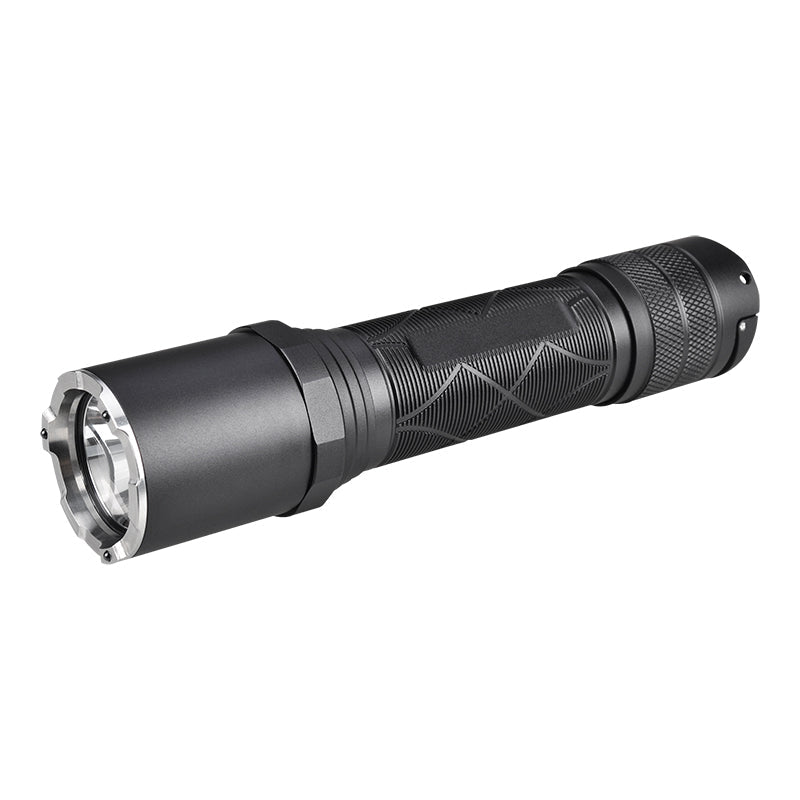
A tactical light vs lantern during power outages is a choice between focused visibility and shared illumination. A tactical flashlight helps you navigate stairs, inspect a dark corner, or move outside. A battery-powered LED lantern spreads light around a room so people can eat, read, and organize supplies. For most households, the strongest emergency lighting plan combines both.
At RichFire®, our perspective comes from 12 years of experience selling weapon flashlights, high-performance tactical lights, and laser sights, supported by experience in product design, precision manufacturing, and rigorous testing. For blackout preparation, however, tactical features should serve everyday needs—not complicate them.
This guide compares beam performance, usable runtime, safety, convenience, and ownership costs. Here, “lantern” means a battery-powered LED lantern, not a fuel-burning model.

Tactical Light vs Lantern: The Quick Comparison
Verdict: Choose a handheld tactical light for movement and inspection. Choose an LED lantern for stationary, shared activities. Buy both when your budget allows.
| Comparison point | Handheld tactical light | Battery-powered LED lantern |
|---|---|---|
| Primary purpose | Directional lighting | Broad area lighting |
| Best blackout tasks | Walking, checking stairs, inspecting specific objects | Eating, reading, organizing supplies |
| Beam pattern | Usually a hotspot with surrounding spill | Usually diffused, multidirectional light |
| Portability | Often compact and pocket-friendly | Often bulkier, with a handle or hanging point |
| Hands-free use | Requires a suitable support or accessory | Usually stands or hangs |
| Main comfort issue | Concentrated light can produce glare | Exposed LEDs can glare at eye level |
| Battery strategy | Depends on output, cell capacity, and regulation | Depends on output, cell capacity, and illuminated area |
| Main buying priority | Useful beam and dependable controls | Stable placement and comfortable low modes |
Neither category automatically delivers longer runtime or better durability. Those outcomes depend on the individual product and its operating mode.
How Tactical Flashlights and Lanterns Distribute Light
Tactical lights prioritize direction and reach
A tactical flashlight concentrates light toward a selected area. Its beam commonly includes a bright central hotspot and softer surrounding spill.
That pattern is useful when checking a stair tread, finding a dropped object, or examining something beyond the reach of room lighting. You direct the light where information is needed.
The compromise is coverage. A flashlight aimed at the floor may leave faces, shelves, and objects behind you poorly illuminated. Moving the beam constantly can also make shared activities inconvenient.
For outage preparation, prioritize a usable low mode, a practical medium mode, and straightforward activation. Maximum brightness is only one part of the purchase.
LED lanterns prioritize shared illumination
A lantern distributes light across a wider area, often through a diffuser that softens the LED’s concentrated output.
Place it on a stable table and several people can use the same illuminated space. Hang it from a secure, suitable support and it can leave the work surface clear.
This makes a lantern particularly practical for meals, board games, packing supplies, and general household coordination.
The tradeoff is distance. A lantern that comfortably lights a table may not reveal an obstacle farther down a driveway. Broad illumination and useful reach are different capabilities.
Brightness: Why Lumens Alone Cannot Decide the Winner
Lumens measure output, not where the light goes
Lumens describe total visible light output. They do not explain how that light is distributed.
Two lights with the same lumen rating can perform very differently. A directional flashlight may concentrate more light on a distant object, while a lantern spreads its output around the room.
That is why a high-lumen lantern does not necessarily replace a lower-lumen flashlight for inspection.
For directional lights, peak beam intensity—commonly expressed in candela—helps describe concentration. Beam distance provides another comparison point, although a published distance should not be treated as a guarantee that you can recognize every object at that range.
Match brightness to the actual task
Rather than selecting one universal lumen target, ask:
-
Can I see stair edges clearly?
-
Can I read instructions without uncomfortable reflections?
-
Can everyone at the table see their supplies?
-
Is the lowest mode comfortable in a bedroom?
-
Can I change modes without cycling through a strobe?
White walls, mirrors, room size, and placement all affect the result.
Our product-selection perspective is simple: a manageable beam and dependable controls are more useful during a blackout than an impressive maximum-output number alone.
Battery Life During Power Outages: Compare Useful Runtime
A runtime rating is not a promise of constant brightness
One important detail is easy to overlook: under the commonly used FL 1 runtime method, runtime extends until output falls to 10% of its initial measured level.
Consequently, a light advertised with several hours of runtime may not maintain its starting brightness for that entire period.
Some products reduce output gradually. Others step down sharply because of thermal management or battery conditions. A regulated light may maintain a more consistent level before declining.
When available, examine a runtime graph. Otherwise, ask the seller about sustained output and the runtime of the mode you actually plan to use.
Neither light category automatically lasts longer
A tactical light used briefly at moderate output may consume less energy than a lantern running all evening. A lantern on a dim setting may outlast a flashlight operated continuously at maximum output.
Compare:
-
Battery capacity and chemistry.
-
Runtime on the intended operating mode.
-
Whether output remains reasonably stable.
-
Charging or replacement options.
-
Whether spare batteries are readily available.
Avoid comparing the longest low-mode runtime of one product with the highest-output runtime of another.
Build an energy budget before an extended outage
Consider this illustrative planning exercise—not a product specification:
| Device | Planned daily use | Three-day requirement |
|---|---|---|
| Shared lantern | Four hours each evening | Twelve operating hours |
| Handheld flashlight | Thirty minutes daily | Ninety operating minutes |
| Backup personal light | Reserved for unexpected needs | Separate reserve |
Check whether your chosen modes can support these operating periods, then allow additional capacity for uncertainty.
Do not assume a power bank will deliver its entire advertised capacity to a light. Conversion losses and charging compatibility matter. Solar charging can supplement preparation, but weather and available daylight make it an uncertain primary backup.

Safety: Emergency Lighting Should Reduce Risk
Choose battery-powered lighting instead of open flames
Ready.gov recommends flashlights, lanterns, and other battery-powered lighting for outages.
For household lighting, these avoid the open-flame hazard introduced by candles or fuel-burning lamps. Stable placement still matters: do not leave a lantern where it can fall onto a stairway or obstruct an exit.
A light is also not protection against electrical hazards. Never approach downed power lines or damaged electrical equipment simply because you can illuminate them.
Keep weapon-mounted lights separate from household lighting
RichFire® sells weapon flashlights, but a weapon-mounted light is not an appropriate substitute for an ordinary household flashlight.
Using a firearm as a lighting tool introduces unnecessary risk. For navigating your home, checking on family members, or locating supplies, use a separate handheld flashlight or lantern.
Laser sights likewise do not provide useful general illumination and should not be treated as blackout equipment.
Select the tool for the task: emergency household lighting should work independently of a weapon.
Manage glare, heat, and battery compatibility
Avoid directing a concentrated beam into anyone’s eyes. Position a lantern so users are not staring directly at its LEDs.
High-output lights can become hot. Keep them clear of bedding and other materials, and follow the manufacturer’s operating instructions.
Use only compatible batteries and chargers. Do not mix different battery types or combine old and new cells in a device unless its manufacturer explicitly permits that arrangement.
Comfort and Accessibility: Which Is Easier to Live With?
Lanterns usually suit shared spaces
A lantern offers a practical advantage when several people remain in one room: nobody has to hold and redirect the light continuously.
Useful features include:
-
A stable base.
-
An accessible low setting.
-
Clearly distinguishable controls.
-
A secure carrying handle.
-
A diffuser that limits direct glare.
Comfort is personal. Test the light where you expect to use it rather than assuming its color temperature or diffuser will suit everyone.
Tactical lights usually suit movement
A compact handheld light is easier to carry while moving between rooms or checking a specific location.
However, holding it occupies a hand. If a task requires both hands, a lantern or suitable headlamp may be more practical.
For users with reduced grip strength or limited dexterity, switch design can matter more than brightness. A complicated sequence of clicks may be difficult to remember under stress.
Durability and Ownership Cost: Compare Models, Not Labels
“Tactical” does not automatically mean waterproof, and “lantern” does not automatically mean fragile.
Look for stated water-resistance and impact-resistance information. Read the test conditions rather than treating a rating as permission to expose the light to any environment.
Also inspect practical details:
-
Does the battery compartment close securely?
-
Is the charging port protected?
-
Can replacement batteries be obtained easily?
-
Does the lantern remain stable on your table?
-
Can the flashlight be found quickly in darkness?
Total ownership cost includes more than purchase price. Factor in batteries, charging accessories, replacement availability, and support.
RichFire® provides a 30-day return period and a two-year warranty. These offer useful purchase reassurance, but customers should still review applicable terms and confirm each model’s features before ordering.
A Practical Home Test: Evaluate Lighting Before You Need It
Published specifications cannot fully represent your rooms, furniture, or users. A short rehearsal can reveal problems before an outage.
Step 1: Test your normal routes
After checking that the route is clear, use the flashlight to walk between the bedroom, bathroom, kitchen, and main exit.
Check stair edges and changes in floor level. Decide whether the beam is too narrow, too bright nearby, or difficult to control.
Step 2: Test shared activities
Place the lantern where your household would gather.
Try reading packaging, preparing an emergency bag, and locating small items. Check whether one position serves everyone or leaves important work areas shadowed.
Step 3: Compare glare and reflected light
Try pointing a handheld light toward a light-colored wall to create indirect illumination. This can make it more comfortable for temporary room lighting.
Do not cover the lens with fabric or use an improvised diffuser that traps heat. Use only compatible accessories and follow product instructions.
Step 4: Check sustained operation
Run each light on the intended mode while following its safety instructions. Observe brightness changes, heat, and battery status.
This is a household suitability check, not a standardized laboratory test. Record the model, mode, battery condition, and results so the comparison remains meaningful.
The Best Emergency Lighting Setup for Different Households
| Situation | First priority | Useful addition |
|---|---|---|
| One person in a small apartment | Accessible handheld flashlight | Compact lantern for longer interruptions |
| Family sharing a main room | Stable LED lantern | Personal flashlights for movement |
| Home with stairs | Flashlight accessible near sleeping areas | Lantern in the gathering space |
| Frequent outdoor movement | Suitable weather-resistant handheld light | Indoor lantern |
| Extended outage preparation | Low-mode lighting and a replenishment plan | Independent backup lights |
Ready.gov advises having a flashlight for every household member. A shared lantern complements those personal lights rather than replacing them.
Keep emergency lights in predictable locations. Check batteries and charging status periodically, and make sure everyone knows how to activate a steady, useful mode.
Choose the Right RichFire® Light for Your Emergency Kit
Start with your household’s tasks, not the highest brightness claim. Identify where you need directional visibility, where you need shared light, and how you will maintain power.
Explore RichFire® handheld tactical lights and compare their low modes, battery options, beam characteristics, and documented durability. Confirm that your chosen model works independently of a weapon, then pair it with an appropriate LED lantern.
With a 30-day return period and a two-year warranty, RichFire® offers an opportunity to evaluate suitability and purchase with support. Review the relevant terms and test your lighting plan before the next outage.

Frequently Asked Questions
Is a tactical light better than a lantern during a power outage?
It is better for movement, inspection, and directional lighting. A lantern is usually more convenient for shared activities in one room. The better choice depends on the task.
Can a tactical flashlight replace an emergency lantern?
Temporarily, yes. Reflected light from a suitable wall can provide broader illumination. However, a flashlight may be harder to position securely and less convenient for prolonged shared use.
Which lasts longer: a tactical flashlight or an LED lantern?
Neither category always wins. Battery capacity, output setting, efficiency, and usage determine runtime. Compare equivalent operating conditions and sustained brightness.
Are rechargeable lights suitable for blackout preparation?
Yes, when kept charged and supported by a realistic backup plan. Confirm charging compatibility and maintain spare capacity rather than assuming electricity will return before the battery runs down.
How many emergency lights should a household have?
Ready.gov recommends a flashlight for each household member. Add shared lanterns according to your gathering spaces and maintain backup lighting where practical.
Can I use a weapon-mounted flashlight around the house?
Use a separate handheld light instead. Ordinary household lighting should not require handling or pointing a firearm. A laser sight is not a substitute for illumination.
References
1. Ready.gov. “Power Outages.” Household preparedness guidance, including personal flashlights and alternative power planning.
2. Ready.gov. “Be Prepared for a Power Outage.” Official guidance recommending flashlights, lanterns, and other battery-powered lighting.
3. U.S. Department of Energy. “Purchasing Energy-Efficient Light Bulbs.” Explanation of lumens as total visible output and watts as power input; used for measurement concepts, not portable-light performance claims.
4. VARTA. “ANSI FL1 Standard.” Explanation of portable-light performance measurements and the 10% runtime endpoint.
5. ANSI. “ANSI/PLATO FL 1-2019: Flashlight Basic Performance Standard.” Scope of standardized directional portable-light performance measurements.
6. Be Ready Utah. “Light & Power.” Guidance on accessible lighting locations, batteries, and household preparedness.
Hot Tags: Tactical Flashlight, Rechargeable Flashlight, Emergency Flashlight, LED Lantern, Rechargeable Lantern, Emergency Lantern, Battery Powered Lantern, Power Outage Lights, Best Flashlight For Power Outages, Best Lantern For Power Outages