
Content Menu
● What Makes a Good Vehicle Utility Light for Camping?
>> Match the Light to the Task
● Choose Beam Quality Before Maximum Lumens
>> Spot Beams for Looking Farther Away
>> Low Modes Deserve Serious Attention
● Understand Runtime and Sustained Brightness
>> Why Advertised Runtime Needs Context
>> Plan Around Your Normal Setting
● Magnetic Vehicle Utility Lights: Convenient, but Check the Surface
>> Check Compatibility Before Depending on a Magnet
>> Adjust the Beam to Reduce Shadows
● Build a Camping Lighting Setup with Independent Backup
>> Use Three Complementary Lighting Roles
● Rechargeable Camping Flashlights: Charging and Storage Safety
>> Charge Within the Manufacturer’s Limits
>> Do Not Treat the Vehicle as Permanent Storage
● Test Your Camping Lights Before Leaving Home
● What Real-World Feedback Can Tell You
● Can Tactical Flashlights Serve as Camping Utility Lights?
● Choose Your Next Light Around Your Actual Camping Routine
>> What Are the Best Vehicle Utility Lights for Camping?
>> How Many Lumens Do I Need for Car Camping?
>> Will a Magnetic Flashlight Attach Anywhere on My Vehicle?
>> Can I Charge My Camping Flashlight from My Vehicle?
>> Does a Long Runtime Mean Constant Brightness?
>> Should I Bring a Backup Light for Vehicle Camping?
Vehicle utility lights for camping should do more than produce an impressive beam. They should help you unpack after sunset, prepare food, locate equipment, and handle unexpected problems without leaving your hands occupied. The right setup combines useful brightness, secure positioning, manageable charging, and an independent backup.
At RichFire®, we bring 12 years of experience selling weapon flashlights, high-performance tactical lights, and laser aiming devices, alongside experience in product design, precision manufacturing, and rigorous testing. Our approach to camping illumination starts with one question: what must the light help you accomplish?
This guide explains how to choose rechargeable vehicle utility lights, organize a practical camping setup, and evaluate performance beyond the largest number on the packaging.

What Makes a Good Vehicle Utility Light for Camping?
A vehicle utility light is a portable light used around a parked vehicle and its campsite. It may illuminate a cargo compartment, camping kitchen, tent entrance, or maintenance task.
Unlike a permanently installed vehicle light, it can move with you. That flexibility matters when your working area changes throughout the evening.
Start with these priorities:
-
A beam suited to your actual tasks.
-
Comfortable low and medium brightness settings.
-
Hands-free positioning where needed.
-
Understandable controls in darkness.
-
Documented battery and charging requirements.
-
An independent light available if the primary one fails.
The most important feature is usability. A powerful flashlight that cannot stay where you need it may be less helpful than a modest light with a stable mount.
Match the Light to the Task
Different activities require different beam patterns and mounting options.
| Camping task | Useful light type | Feature to prioritize |
|---|---|---|
| Unpacking a trunk | Floodlight or adjustable work light | Broad coverage without harsh reflections |
| Preparing food | Lantern or area light | Stable placement and comfortable brightness |
| Pitching a tent | Headlamp | Hands-free operation |
| Checking vehicle equipment | Directional work light | Adjustable beam placement |
| Walking beyond camp | Handheld flashlight or headlamp | Portable illumination and accessible controls |
| Overnight tent use | Low-output portable light | Gentle illumination and simple operation |
Treat this table as a starting point, not a requirement to buy six separate products. A versatile light can cover several jobs, provided its compromises suit your trip.
Choose Beam Quality Before Maximum Lumens
Lumens describe total light output. They do not tell you whether the beam will make a cooking surface comfortable to use or a crowded cargo compartment easy to search.
Beam distribution matters just as much.
Flood Beams for Close Work
A flood beam spreads illumination across a wider area. It is useful for unpacking, organizing gear, and working beside a vehicle.
A narrow hotspot can create a bright patch surrounded by darkness. On reflective surfaces, it may also produce distracting glare.
For close tasks, start with a lower setting and increase brightness only when necessary. More output is not automatically more useful.
Spot Beams for Looking Farther Away
A concentrated beam is useful when you need to examine something beyond your immediate working area.
However, long-distance illumination does not replace comfortable campsite lighting. A flashlight selected primarily for reach may need a separate lantern or work light beside it.
Avoid directing intense beams toward other campers, occupied tents, or passing drivers.
Low Modes Deserve Serious Attention
Low-output settings are easy to overlook during shopping. At camp, they may become your most frequently used modes.
They help when checking a bag, reading equipment labels, or moving inside a tent without lighting the entire campsite.
Before buying, check the actual lowest setting and how you access it. A light that always starts at maximum output may be inconvenient for quiet nighttime use.
Understand Runtime and Sustained Brightness
A maximum-output figure and a runtime figure do not necessarily describe hours of operation at the same brightness.
This distinction is important when comparing rechargeable camping flashlights.
Why Advertised Runtime Needs Context
Under commonly used FL1 reporting methods, runtime extends until output falls to 10% of its initial measured level.
Consequently, a light can remain technically “running” after becoming much dimmer than it was at startup. Runtime alone does not reveal whether output stays steady or declines throughout use.
Ask for:
-
Runtime information for individual modes.
-
A brightness-over-time graph, where available.
-
The battery used during testing.
-
Notes about automatic brightness reductions.
-
Relevant operating and charging temperatures.
These details make comparisons more meaningful than a single headline specification.
Plan Around Your Normal Setting
For campsite tasks, evaluate the setting you expect to use most often—not just turbo.
Consider whether medium output comfortably illuminates your workspace and whether that mode lasts through your planned evening.
High-output modes may reduce brightness as the light manages heat. That behavior is not necessarily a fault, but buyers should understand it before relying on sustained maximum illumination.
A simple planning exercise helps: list your evening tasks, estimate how long each will take, and identify which brightness setting each requires. Then leave a reserve for delays.
Magnetic Vehicle Utility Lights: Convenient, but Check the Surface
A magnetic flashlight can free your hands during packing or equipment checks. Its usefulness depends on where it attaches and how securely it stays there.
Do not assume every part of a vehicle is a suitable mounting surface.
Check Compatibility Before Depending on a Magnet
Plastic trim, glass, and aluminum panels will not provide the same attachment as suitable steel surfaces.
Even on steel, paint, curvature, dirt, and the light’s orientation can affect practical stability.
Before relying on a magnetic mount:
-
Confirm the surface is suitable.
-
Clean the contact area and inspect the base.
-
Attach the light with the vehicle stationary.
-
Gently check whether it slips or rotates.
-
Reposition it if the attachment feels uncertain.
Avoid sliding the magnet across painted surfaces. Trapped grit can damage the finish.
A portable magnetic work light is not automatically approved for exterior use while driving. Remove it before moving the vehicle unless its manufacturer explicitly specifies an appropriate vehicle-mounted application.
Adjust the Beam to Reduce Shadows
An adjustable head lets you change the beam direction without changing the attachment point.
This helps when illuminating a storage compartment or inspecting equipment from an awkward angle.
If your hands cast shadows over the task, move the light to one side or add a second source. More lumens from the same position may not solve the problem.
Keep lights and cables away from hot surfaces, moving components, and pinch points.

Build a Camping Lighting Setup with Independent Backup
One multifunctional light can be convenient. Depending on one battery-powered device for everything creates a single point of failure.
A balanced setup does not need to be complicated.
Use Three Complementary Lighting Roles
Consider organizing your kit around:
-
A work or area light for the parked vehicle.
-
A headlamp for hands-free tasks and movement.
-
A handheld flashlight as an independent backup.
The lights can share some responsibilities, but they should remain independently usable.
A headlamp is especially valuable while pitching a tent, carrying equipment, or walking away from the vehicle. Keeping it accessible is more useful than storing it beneath packed luggage.
Keep Backup Power Separate
A spare light should not depend on the same depleted power source as your primary light.
Depending on the equipment, backup power might mean compatible spare batteries, a charged power bank, or a second charged device.
Keep spare battery terminals protected from metal objects. Follow the manufacturer’s instructions for battery compatibility and storage.
If a light also charges your phone, remember that both functions draw from the same energy supply. Preserve enough capacity for essential illumination.
Rechargeable Camping Flashlights: Charging and Storage Safety
Vehicle camping makes charging convenient, but parked vehicles can also expose equipment to unsuitable temperatures.
USB charging does not remove the need to follow battery safety instructions.
Charge Within the Manufacturer’s Limits
Use charging equipment specified or approved for the device. Check the manual rather than assuming any cable and adapter combination is suitable.
Avoid charging equipment that has been damaged or exposed to conditions outside its specified limits.
Stop using a battery-powered light if you notice swelling, unusual odor, excessive heat, or other signs of damage.
Do not charge a light beneath bedding or inside tightly packed luggage. Choose a dry location where you can monitor it, away from easily ignited materials.
Do Not Treat the Vehicle as Permanent Storage
A closed vehicle can become an unsuitable place for battery storage during temperature extremes.
Check the product’s storage limits and take sensitive equipment indoors when conditions require it.
After a trip, inspect the light, clean it as directed, and check seals and charging-port covers. Follow the manual for longer-term battery storage rather than assuming every battery requires the same routine.
Test Your Camping Lights Before Leaving Home
A short rehearsal reveals practical weaknesses that specifications cannot show.
Conduct it after dark, using your actual vehicle and normal camping equipment.
-
Find the light without illuminating the entire cargo area.
-
Unpack a frequently used item with both hands free.
-
Check whether the beam causes glare on reflective surfaces.
-
Position the light where your hands will not block it.
-
Operate the controls while wearing your usual gloves.
-
Test the lowest mode inside your tent.
-
Confirm the backup light works independently.
-
Check that your charging cable and power source are compatible.
For a longer test, run the intended working mode through a typical evening task. Note whether brightness remains sufficient and whether the body becomes uncomfortable to handle.
This is a practical suitability check, not a substitute for standardized laboratory testing.
What Real-World Feedback Can Tell You
Useful lighting feedback describes a task and a limitation—not simply whether a product is “bright.”
Public camping-light accounts highlight the value of adjustable output, hanging options, and broad illumination. They also show why even a low setting may feel too bright inside a dark tent.
When reading reviews, look for context:
-
Was the light used for car camping or backpacking?
-
How was it positioned?
-
Which mode did the reviewer actually use?
-
Did the reviewer discuss charging or battery changes?
-
Were any inconveniences identified?
A spacious vehicle campsite may accommodate a larger lantern comfortably. The same product may be less attractive when carried over long distances.
Treat individual experiences as decision-making clues, not universal performance guarantees.
Can Tactical Flashlights Serve as Camping Utility Lights?
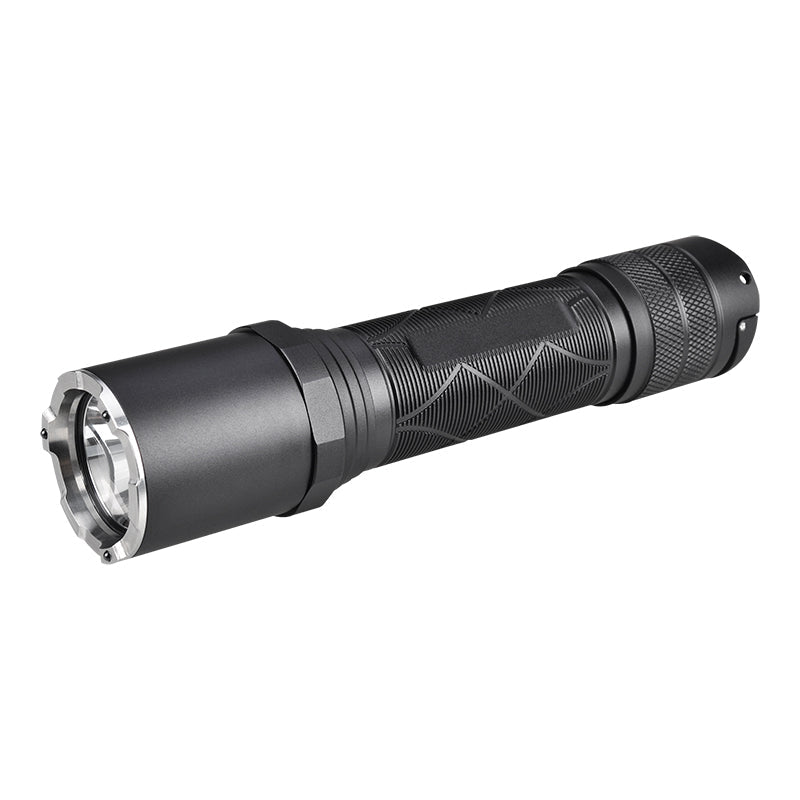
Some handheld tactical flashlights can provide useful portable illumination. Their suitability depends on their beam, controls, low modes, and mounting options.
A concentrated beam or momentary switch may be helpful for certain situations but less convenient for sustained cooking or equipment organization.
Weapon-mounted lights have a different primary purpose. They should not replace independent camping illumination. Never use a firearm-mounted light to inspect ordinary campsite objects or identify a walking route.
Laser aiming devices are not campsite utility lights.
At RichFire®, we recommend choosing equipment according to its intended application rather than assuming every high-performance light serves the same role.
Choose Your Next Light Around Your Actual Camping Routine
Before purchasing, identify your three most common after-dark tasks. Then compare suitable products by beam pattern, working-mode runtime, controls, positioning, and charging requirements.
RichFire® products come with a 30-day return period and a two-year warranty. Review the applicable terms and the individual product specifications before ordering.
Explore RichFire®’s high-performance lighting range, and ask our team to help you check which products suit your intended use. Start with your campsite tasks—not the largest lumen claim.

Frequently Asked Questions
What Are the Best Vehicle Utility Lights for Camping?
The best choice depends on the task. A floodlight suits close work, a lantern provides shared area lighting, and a headlamp supports hands-free movement. Prioritize useful modes and secure positioning over maximum output alone.
How Many Lumens Do I Need for Car Camping?
There is no universal requirement. Beam width, distance, surface reflections, and surrounding darkness all affect useful brightness. Choose adjustable output and test the normal working mode in conditions similar to your campsite.
Will a Magnetic Flashlight Attach Anywhere on My Vehicle?
No. Plastic, glass, and aluminum are not suitable magnetic mounting surfaces. Check the attachment on an appropriate surface while parked, and do not assume a portable magnetic light is suitable for use while driving.
Can I Charge My Camping Flashlight from My Vehicle?
Yes, if the vehicle power source and charging equipment meet the product’s requirements. Follow the manual, observe temperature limits, and avoid charging damaged equipment or leaving it covered by luggage.
Does a Long Runtime Mean Constant Brightness?
Not necessarily. Common runtime reporting can include operation after output has fallen substantially. Mode-specific information and runtime graphs provide a clearer picture of sustained performance.
Should I Bring a Backup Light for Vehicle Camping?
Yes. An independently powered backup preserves illumination if your main light fails, becomes misplaced, or needs charging. Keep it accessible rather than buried beneath equipment.
References
1. Fenix Lighting — “Use These Fenix Lights as Vehicle Utility Lights While Camping.” Original topic supplied for reconstruction. The page appeared in search results, but its full body could not be retrieved; no paragraph-level comparison or unverified specifications were taken from it. https://www.fenixlighting.com/blogs/news/use-these-fenix-lights-as-vehicle-utility-lights-while-camping
2. Fenix Lighting — “Take These Rechargeable Flashlights From Car to Camp.” Manufacturer discussion of portable lighting across vehicle and camping tasks, including adjustable heads, carrying options, charging, and mode-dependent runtime. Manufacturer claims apply to the specified Fenix models, not RichFire® products. https://www.fenixlighting.com/blogs/news/take-these-rechargeable-flashlights-from-car-to-camp
3. Fenix Lighting — “Talking Points – Fenix CL30R,” by Ambassador Justin J. Public, brand-affiliated first-person feedback covering campsite use, vehicle work, hanging arrangements, output adjustment, and the limitations of low-mode brightness inside a tent. It is not an independent review or a RichFire® customer testimonial. https://www.fenixlighting.com/blogs/news/talking-points-fenix-cl30r
4. U.S. National Park Service — “Ten Essentials.” Official outdoor-preparedness guidance identifying illumination, hands-free headlamps, and extra batteries as important equipment. https://www.nps.gov/articles/10essentials.htm
5. LED-Resource — “ANSI FL1 Standard.” Technical explanation of portable-light performance reporting, the 10% runtime threshold, and the importance of brightness-over-time graphs. https://www.led-resource.com/ansi-fl1-standard/
6. National Fire Protection Association — “Lithium-Ion Battery Safety.” Guidance supporting compatible charging equipment, avoiding extreme storage temperatures, and discontinuing use when batteries show damage or warning signs. https://www.nfpa.org/education-and-research/energy-transition/lithium-ion-batteries
7. UL Solutions — “Safety First: UL Solutions Amplifies Awareness for Battery Safety and Fire Prevention.” Battery-safety guidance covering appropriate chargers and warning signs such as heat, smoke, and bulging. https://www.ul.com/news/safety-first-ul-solutions-amplifies-awareness-battery-safety-and-fire-prevention
Hot Tags: Camping Lights, Camping Flashlights, Rechargeable Flashlights, LED Camping Lanterns, Car Camping Lights, Magnetic Flashlights, Rechargeable Camping Lights, Camping Headlamps, Tactical Flashlights, Portable LED Work Lights