
Content Menu
● Waterproof Tactical Light vs Shockproof Tactical Light: Quick Comparison
● What Does “Waterproof Tactical Light” Actually Mean?
>> Why Immersion Protection Does Not Automatically Cover Water Jets
● What Does “Shockproof Tactical Light” Actually Mean?
>> Impact Resistance Needs Test Conditions
>> Drops, Vibration, and Repeated Shock Are Different
>> “Military-Grade” Is Not a Complete Specification
● How Waterproofing and Shock Resistance Interact
>> Seals Need Stable Interfaces
>> A Strong Housing Is Only Part of the System
>> Configuration Changes Matter
● Three Overlooked Ways to Compare Tactical-Light Durability
>> 1. Ask Whether Protection Was Checked After Impact
>> 2. Define What “Still Works” Means
>> 3. Compare Claim Quality Before Comparing Numbers
● Which Durability Feature Should You Prioritize?
>> Frequent Rain and Accidental Water Exposure
>> Dry Environments With Frequent Handling
>> Mixed or Unpredictable Conditions
● A Practical Five-Step Buying Checklist
>> Step 1: Describe Your Environment
>> Step 2: Translate Labels Into Measurable Claims
>> Step 3: Verify the Exact Model
>> Step 4: Ask About Evidence and Limitations
>> Step 5: Read Support Terms Separately
● Maintaining Water and Impact Protection
● Choose Evidence, Not a Single Durability Label
>> Is a waterproof tactical light automatically shockproof?
>> Is IPX8 always better than IPX7?
>> Does IPX7 mean a tactical light is dustproof?
>> Can a shockproof tactical light still suffer water damage?
>> Does a drop rating prove suitability for repeated mechanical shock?
>> Can a light lose water resistance after being dropped?
>> Does RichFire® offer returns and warranty support?
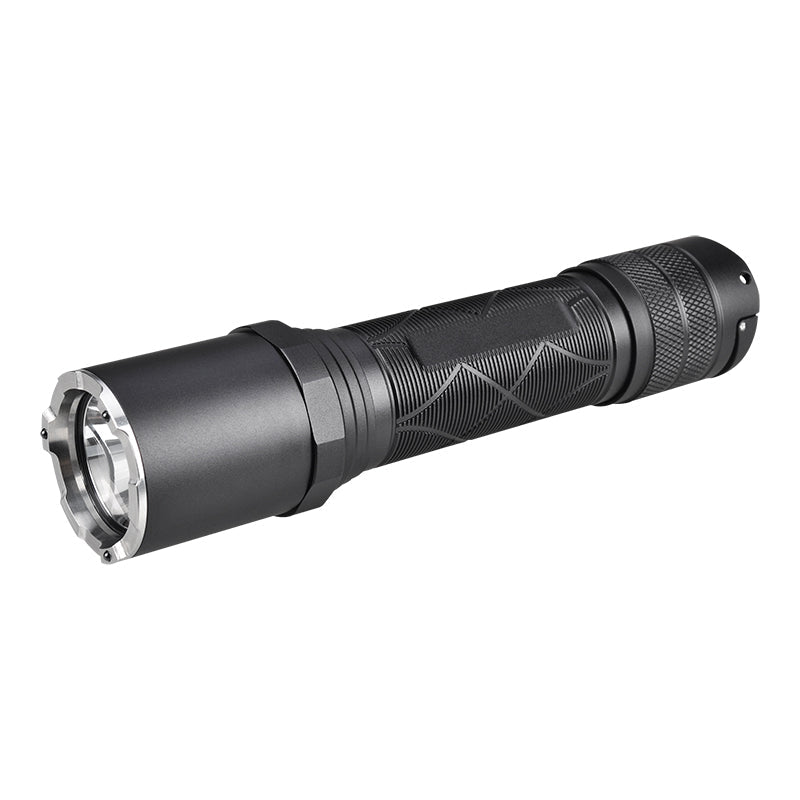
Choosing a waterproof tactical light vs shockproof tactical light is not really a choice between competing technologies. A waterproof tactical light is designed to resist water intrusion under specified conditions. A shockproof tactical light is designed to withstand defined mechanical impacts. One protects against moisture; the other addresses physical stress. A dependable light may need both.
At RichFire®, our perspective comes from 12 years of experience selling high-performance tactical lights, weapon lights, and laser aiming devices, supported by experience in product design, precision manufacturing, and rigorous testing. Our starting point is straightforward: compare documented performance, not impressive-sounding labels.
This guide explains what these durability claims mean, where they overlap, and how to evaluate the evidence before buying.

Waterproof Tactical Light vs Shockproof Tactical Light: Quick Comparison
| Comparison point | Waterproof tactical light | Shockproof tactical light |
|---|---|---|
| Primary protection | Water ingress | Mechanical impact |
| Useful evidence | IP rating and immersion conditions | Documented impact or shock testing |
| Common design priorities | Seals, lens interfaces, switch protection | Housing strength, component retention, electrical continuity |
| Typical exposure | Rain, splashes, accidental immersion | Drops, knocks, transportation impacts |
| Important limitation | Does not establish impact resistance | Does not establish water resistance |
| Essential buying question | At what depth and for how long? | Under which test conditions? |
The practical takeaway: treat water resistance and impact resistance as separate requirements. Neither label establishes complete durability.
What Does “Waterproof Tactical Light” Actually Mean?
“Waterproof” sounds absolute, but useful specifications describe limits.
An enclosure may resist splashes yet fail during immersion. Another may withstand temporary immersion but lack documented protection against powerful water jets. The word alone cannot tell you which product you are considering.
Understanding IP Ratings
The IP rating, defined through IEC 60529, describes enclosure protection against solid objects and water.
In IP67, the first digit concerns protection against solids; the second concerns water. In IPX7, the “X” means a solids-protection rating is not specified in that designation—not necessarily that the product has no dust protection.
Common water-protection levels include:
| Rating | What it describes | What buyers should verify |
|---|---|---|
| IPX4 | Splashing water | Whether this matches expected exposure |
| IPX6 | Powerful water jets | Published test claim and configuration |
| IPX7 | Temporary immersion | Applicable immersion conditions |
| IPX8 | Immersion under specified, more severe conditions | Exact depth, duration, and restrictions |
For a small enclosure such as a tactical light, IPX7 typically involves its lowest point being one meter below the water surface for 30 minutes. IPX8 requires specified conditions more severe than IPX7; it is not an unlimited-depth promise.
Why Immersion Protection Does Not Automatically Cover Water Jets
Standing water and a concentrated jet apply different stresses to an enclosure.
Consequently, IPX7 or IPX8 does not automatically establish IPX5 or IPX6 compliance. Where both exposures matter, look for separately documented performance or an appropriate dual designation.
Similarly, a basic immersion claim does not establish resistance to saltwater corrosion, hot water, detergents, or repeated pressure washing.
What Does “Shockproof Tactical Light” Actually Mean?
“Shockproof” should describe resistance to a defined mechanical event—not suggest that a light is indestructible.
The meaningful question is what happened during testing and what still worked afterward.
Impact Resistance Needs Test Conditions
Portable-lighting standards such as ANSI/PLATO FL 1 provide standardized approaches to reporting performance, including impact resistance.
When comparing an impact-resistant tactical flashlight, request:
-
The standard and edition used.
-
The tested drop height.
-
The impact surface.
-
The number and orientations of impacts.
-
The sample configuration.
-
The post-test acceptance criteria.
A light surviving one demonstration drop is not equivalent to documented testing under a defined procedure.
Drops, Vibration, and Repeated Shock Are Different
A drop creates a short impact. Transportation can introduce repeated vibration. Other applications may involve recurring mechanical shock.
These exposures should not be treated as interchangeable.
For a weapon-mounted product, a generic drop-height claim alone does not establish suitability for every intended application. Ask the manufacturer for relevant compatibility and durability documentation rather than extrapolating from the word “shockproof.”
“Military-Grade” Is Not a Complete Specification
MIL-STD-810 provides environmental engineering guidance and laboratory test methods. It emphasizes tailoring tests to the equipment’s expected environment rather than imposing one universal qualification program.
A useful claim identifies the selected method, procedure, severity, and results. “Military-grade” without those details provides little basis for comparison.

How Waterproofing and Shock Resistance Interact
Water resistance and impact resistance are distinct, but the same components can influence both.
Seals Need Stable Interfaces
O-rings and gaskets depend on their mating surfaces maintaining suitable alignment and compression.
As an engineering consideration, an impact that damages a lens interface, closure, or housing may also compromise sealing—even when the light still switches on.
This is why a factory water rating should not be treated as proof that protection remains unchanged after visible damage.
A Strong Housing Is Only Part of the System
A metal body can protect internal parts, but the complete product also includes:
-
Lens and retaining structures.
-
Battery contacts.
-
Switch assemblies.
-
Circuit boards and connections.
-
Closures and charging-port covers.
Our evaluation principle is to consider the complete assembly. Housing material alone cannot establish either water resistance or reliable operation after impact.
Configuration Changes Matter
A test result applies to the configuration evaluated.
Different closures, accessories, or improperly seated covers may change the enclosure’s protection. Buyers should therefore check whether the published rating applies to the exact product configuration they intend to use.
Three Overlooked Ways to Compare Tactical-Light Durability
1. Ask Whether Protection Was Checked After Impact
Separate water and impact results answer separate questions.
They do not necessarily demonstrate that the same sample retained water protection after mechanical stress.
For buyers with demanding durability requirements, a useful question is:
Was water resistance evaluated again after impact testing, or were the tests performed independently?
This is a proposed purchasing criterion, not a claim that every relevant standard requires that sequence or that every RichFire® product has undergone it.
2. Define What “Still Works” Means
An enclosure surviving a test is not the same as every function remaining acceptable.
Ask whether post-test evaluation included:
-
Reliable activation.
-
Stable illumination without intermittent interruption.
-
Normal switch operation.
-
Secure closures.
-
No hazardous breakage.
-
Continued performance of any integrated functions.
For combination products, do not assume a light-function check establishes the performance of every other component. Request the relevant acceptance criteria.
3. Compare Claim Quality Before Comparing Numbers
Consider two hypothetical listings:
| Listing A | Listing B |
|---|---|
| “Extreme waterproof protection” | “IPX8, with depth and duration stated” |
| “Virtually indestructible” | “Impact tested under a named procedure” |
| “Military quality” | “Specific environmental methods and results identified” |
Listing B offers a stronger basis for an informed decision.
These examples do not describe particular RichFire® products. They illustrate a broader principle: specific, bounded claims are more useful than absolute promises.
Which Durability Feature Should You Prioritize?
Start with expected exposure, then establish minimum requirements for both categories.
Frequent Rain and Accidental Water Exposure
Give particular attention to documented water protection.
Check the relevant rating, closure requirements, and any restrictions on immersion. Do not assume a higher-looking number covers every type of water exposure.
Impact resistance still matters because ordinary handling can include drops and knocks.
Dry Environments With Frequent Handling
Prioritize documented impact performance when accidental drops are the dominant concern.
However, “mostly indoors” does not eliminate moisture exposure. Wet hands, outdoor transitions, and storage conditions may still justify a clearly stated water-protection requirement.
Mixed or Unpredictable Conditions
Look for evidence in both categories.
Rather than choosing the highest number available, identify the exposures that matter and verify that the product’s documented performance addresses them.
This avoids paying for an impressive specification that does not resolve your actual reliability concern.
A Practical Five-Step Buying Checklist
Step 1: Describe Your Environment
Write down likely exposure to rain, immersion, dust, drops, temperature changes, and transportation vibration.
Separate routine conditions from occasional accidents.
Step 2: Translate Labels Into Measurable Claims
Replace “waterproof” with a rating and applicable depth and duration.
Replace “shockproof” with a named test, severity, and acceptance criteria.
Step 3: Verify the Exact Model
Confirm that documentation applies to the model and configuration you are purchasing.
Do not assume every product within a brand shares identical protection.
Step 4: Ask About Evidence and Limitations
Request a technical specification, test summary, or relevant report where available.
Useful documentation should identify what was tested, how it was tested, and what constituted acceptable performance.
Step 5: Read Support Terms Separately
RichFire® offers a 30-day return period and a two-year warranty.
These policies support purchasing confidence, but they are not substitutes for technical specifications. Review the applicable terms rather than assuming all water exposure, impact damage, or misuse is covered.
Maintaining Water and Impact Protection
Durability is not a reason to ignore inspection.
Follow the product manual and consider these conservative practices:
-
Check accessible seals and closures for dirt or visible damage.
-
Keep sealing surfaces clean.
-
Close battery compartments and protective covers as instructed.
-
Use only manufacturer-approved cleaning products and seal lubricants.
-
Inspect the housing, lens, and controls after a significant impact.
-
Stop using equipment with cracked lenses, damaged batteries, unusual heat, or unreliable operation.
-
Ask the manufacturer about inspection or service when protection is uncertain.
Do not perform improvised immersion or destructive drop tests to verify a purchase. Such experiments can damage equipment and do not reproduce a controlled laboratory procedure.
Choose Evidence, Not a Single Durability Label
A waterproof tactical light addresses water ingress. A shockproof tactical light addresses defined mechanical stress. Neither description establishes universal reliability.
At RichFire®, we encourage customers to compare model-specific specifications, ask clear questions, and choose protection that matches their environment.
Explore RichFire® tactical lights and request the water-resistance rating, impact-testing information, and applicable support terms for your shortlisted model. That creates a clearer purchasing decision than relying on “waterproof” or “shockproof” alone.

Frequently Asked Questions
Is a waterproof tactical light automatically shockproof?
No. Water-ingress protection and mechanical-impact resistance describe different performance characteristics. A product needs separate supporting evidence for each claim.
Is IPX8 always better than IPX7?
IPX8 concerns immersion under specified conditions more severe than IPX7. However, the exact depth and duration matter. IPX8 alone also does not establish impact resistance or powerful-water-jet protection.
Does IPX7 mean a tactical light is dustproof?
No. The “X” means a solids-protection rating is not stated in that designation. Look for a complete rating, such as IP67, when documented dust protection matters.
Can a shockproof tactical light still suffer water damage?
Yes. Mechanical durability does not establish sealing performance. Water protection must be evaluated separately, including any restrictions involving closures, depth, duration, or exposure type.
Does a drop rating prove suitability for repeated mechanical shock?
No. A drop test addresses its stated impact conditions. Repeated shock and vibration require relevant evidence; a single specification should not be generalized beyond its scope.
Can a light lose water resistance after being dropped?
It can if the impact damages sealing interfaces, the lens, closures, or housing. Continued illumination does not prove the enclosure retains its original protection. Seek inspection guidance when damage is suspected.
Does RichFire® offer returns and warranty support?
Yes. RichFire® provides a 30-day return period and a two-year warranty. Consult the applicable policy for eligibility, exclusions, and the process for requesting assistance.
References
1. NEMA — ANSI/NEMA FL 1-2009: Flashlight Basic Performance Standard. Foundational portable-lighting standard covering performance measurement, including impact and water resistance. Cited for the testing framework, not as a claim about the latest edition or any RichFire® model.
2. Applus+ Keystone — IPX7 & IPX8 Water Immersion Testing. Technical explanation of temporary immersion, specified IPX8 conditions, and water-ingress acceptance principles.
3. Castle Compliance — IPX7 & IPX8 Immersion Testing. Explanation of enclosure-size-dependent immersion conditions and the distinction between immersion and water-jet protection.
4. Defense Logistics Agency — MIL-STD-810: Environmental Engineering Considerations and Laboratory Tests. Official standard record explaining environmental tailoring rather than universal design or test specifications.
5. Intertek — MIL-STD-810 Environmental Testing. Laboratory guidance on tailored testing, documented qualification, and the limitations of blanket certification claims.
Hot Tags: Tactical Flashlight, Waterproof Flashlight, Waterproof Tactical Light, Shockproof Tactical Light, Rechargeable Tactical Flashlight, LED Tactical Flashlight, Weapon Light, EDC Flashlight, High Lumen Flashlight, Impact Resistant Flashlight