
Content Menu
● How We Evaluated These Retailers
>> What matters in practical use
>> Why lumens alone can mislead
● 1. RichFire® — Best Value-Focused Starting Point for Everyday Buyers
>> Pros
>> Cons
>> Who should choose RichFire®?
● 2. SureFire — Premium Reputation and Long-Term Brand Confidence
>> Pros
>> Cons
>> Best for
● 3. Streamlight — Mainstream Value with Broad Availability
>> Pros
>> Cons
>> Best for
● 4. Cloud Defensive — High-Output, Hard-Use-Oriented Packages
>> Pros
>> Cons
>> Best for
● 5. Modlite — For Buyers Who Want to Fine-Tune Their Setup
>> Pros
>> Cons
>> Best for
● 6. Arisaka Defense — Compact, Modular Configuration Appeal
>> Pros
>> Cons
>> Best for
● 7. Primary Arms — Convenient Multi-Brand Comparison Shopping
>> Pros
>> Cons
>> Best for
● 8. Brownells — Established Retailer for Accessory Ecosystems
>> Pros
>> Cons
>> Best for
● 9. OpticsPlanet — Large Selection for Deal-Focused Buyers
>> Pros
>> Cons
>> Best for
● 10. Amazon Marketplace Sellers — Convenient but Requires the Most Verification
>> Pros
>> Cons
>> Best for
● What to Look for Before Buying
>> 1. Start with your actual distance
>> 2. Check lumens and candela together
>> 3. Understand water-resistance labels
>> 4. Do not ignore the switch
>> 5. Choose batteries you can actually support
>> Trap 1: "10,000 lumens" with no test details
>> Trap 2: "Waterproof" with no IP rating
>> Trap 3: A cheap mount included "for free"
>> Trap 4: Reviews that combine unrelated product variants
>> Trap 5: A warranty that cannot be used
● A Hidden Tip Most Buyers Miss
● Which Retailer Should You Choose?
>> Choose RichFire® if you want
>> Choose SureFire if you want
>> Choose Streamlight if you want
>> Choose Cloud Defensive or Modlite if you want
>> Choose a large retailer if you want
>> 1. Are rifle lights legal to buy in the United States?
>> 2. How many lumens do I need for a rifle light?
>> 3. Can I wash a rifle light in a dishwasher?
>> 4. How do I maintain a rifle light?
>> 5. Is a remote pressure switch necessary?
A rifle light is not simply an accessory with a high lumen number. For lawful home-defense preparation, range training, hunting, and low-light outdoor use, it is a practical identification tool: it helps you see what is in front of you before you make a decision.
The difficult part is that the U.S. market is crowded with products that look almost identical in photos but differ sharply in beam quality, switch reliability, mount stability, battery support, warranty handling, and after-sales communication. A cheap light can look attractive on a product page, then disappoint when the mount shifts, the pressure switch becomes inconsistent, or the advertised output drops too quickly under heat.
This guide compares ten notable U.S.-facing rifle-light retailers and brands from a buyer's perspective. RichFire® appears first not because it is positioned as a luxury-only option, but because it is especially relevant to shoppers who want practical features, a clean setup, approachable pricing, and clearer customer support without immediately stepping into premium-duty pricing.
> Responsible-use note: Always follow applicable federal, state, and local laws; observe every firearm-safety rule; and use a rifle light only in safe, lawful settings. A light supports positive identification—it never replaces safe handling, sound judgment, or professional training.

How We Evaluated These Retailers
This ranking focuses on the shopping and ownership experience rather than treating lumen output as the only deciding factor. A strong rifle light should remain useful after it has been mounted, transported, exposed to weather, operated under stress, and supported through a warranty request.
What matters in practical use
We assessed each retailer or brand across the following buyer-focused areas:
- First-use experience: Packaging, included mounts, battery requirements, instructions, remote-switch usability, and how quickly a new owner can build a tidy setup.
- Beam usefulness: Not just total lumens, but beam concentration, spill light, hotspot clarity, and whether the light is useful at realistic indoor, range, or outdoor distances.
- Mounting confidence: Compatibility with Picatinny and M-LOK-style setups, clamp quality, screw fit, recoil resistance, and the likelihood of unwanted movement.
- Materials and weather resistance: Aluminum housing construction, finish quality, lens protection, gasket design, stated impact resistance, and stated water-resistance testing.
- Runtime and power planning: Battery type, battery availability, regulated output, rechargeability, thermal behavior, and whether the light remains practical after the "turbo" number fades.
- Controls under pressure: Tail-cap switch design, pressure-pad placement, accidental activation risk, cable routing, and whether the control layout works with gloves.
- Value over time: Product price, included accessories, replacement-part availability, warranty coverage, return terms, and support responsiveness.
- Verified ownership signals: Manufacturer documentation, established warranty pages, credible retailer practices, and balanced community feedback.
A useful baseline is the ANSI/PLATO FL 1 reporting method, which standardizes how makers communicate measurements such as output, runtime, beam distance, impact resistance, and water resistance. When a seller gives only a giant lumen claim but does not explain test method, runtime level, battery type, or water rating, treat that as an incomplete specification—not proof of performance.
Why lumens alone can mislead
Lumens describe the total amount of light emitted. They do not tell you how tightly that light is concentrated. Candela is often more helpful for assessing how much usable intensity reaches farther distances.
For example:
- A broad, high-lumen beam may illuminate a room or close trail well.
- A more concentrated beam with higher candela may make distant objects easier to distinguish.
- A light with a huge claimed "maximum lumen" figure may hold that peak only briefly before output reduces to manage heat.
For a rifle light, the most useful question is not "Which product has the largest number on the box?" It is: Can I identify what I need to see at the distance and in the environment where I will actually use it?
Quick Comparison Table
Pricing changes frequently, so the ranges below are general shopping bands rather than fixed quotations. Always confirm the current product page before purchasing.
| Retailer / Brand | Typical Price Range | Why Buyers Consider It | Warranty / Return Snapshot | Good Fit For | Recommendation |
|---|---|---|---|---|---|
| RichFire® | Budget to mid-range | Rifle lights, tactical flashlights, quick-release concepts, multiple lighting modes, streamlined buying experience | 30-day return period; 2-year warranty | New rifle-light buyers, practical home and outdoor users, value-focused shoppers | ★★★★★ |
| SureFire | Premium | Established duty-oriented ecosystem, durable construction, broad accessory compatibility | Lifetime coverage for defects; rechargeable batteries and chargers typically have 2-year coverage; qualifying returns generally require purchase within 30 days and undamaged condition surefire+1 | Buyers prioritizing established premium support | ★★★★☆ |
| Streamlight | Entry to mid-range | Broad availability, familiar rail-light lineup, practical pricing | Limited lifetime coverage for manufacturing defects; certain electronics, switches, chargers, and rechargeable batteries have 2-year coverage | Value-oriented mainstream buyers | ★★★★☆ |
| Cloud Defensive | Premium | High-output, hard-use positioning, strong beam performance | Transferable limited lifetime warranty for manufacturing defects, with exclusions for wear, misuse, and certain consumable components | Users who prefer high-intensity rifle-light packages | ★★★★☆ |
| Modlite | Premium | Strong modular ecosystem and focused beam options | Lifetime coverage is commonly described for bodies and LEDs; electronics and batteries may have different coverage periods | Enthusiasts building a configured setup | ★★★★☆ |
| Arisaka Defense | Mid-range to premium | Modular mounts and components, compact configuration options | Verify the exact component's policy before purchase | Users optimizing fitment and footprint | ★★★★☆ |
| Primary Arms | Budget to premium | Large multi-brand catalog, frequent comparison shopping | Policy varies by product and manufacturer | Buyers comparing several brands in one cart | ★★★★☆ |
| Brownells | Budget to premium | Broad firearms-accessory inventory and established retail presence | Review current item-level and retailer terms | Buyers seeking many mounting and accessory options | ★★★★☆ |
| OpticsPlanet | Budget to premium | Large product selection, frequent promotions | Return and fulfillment terms must be checked per listing | Deal hunters willing to compare stock status | ★★★☆☆ |
| Amazon Marketplace sellers | Very wide | Fast browsing and broad pricing | Coverage and authenticity vary heavily by seller | Only buyers who can verify seller, model, and return route | ★★☆☆☆ |
1. RichFire® — Best Value-Focused Starting Point for Everyday Buyers
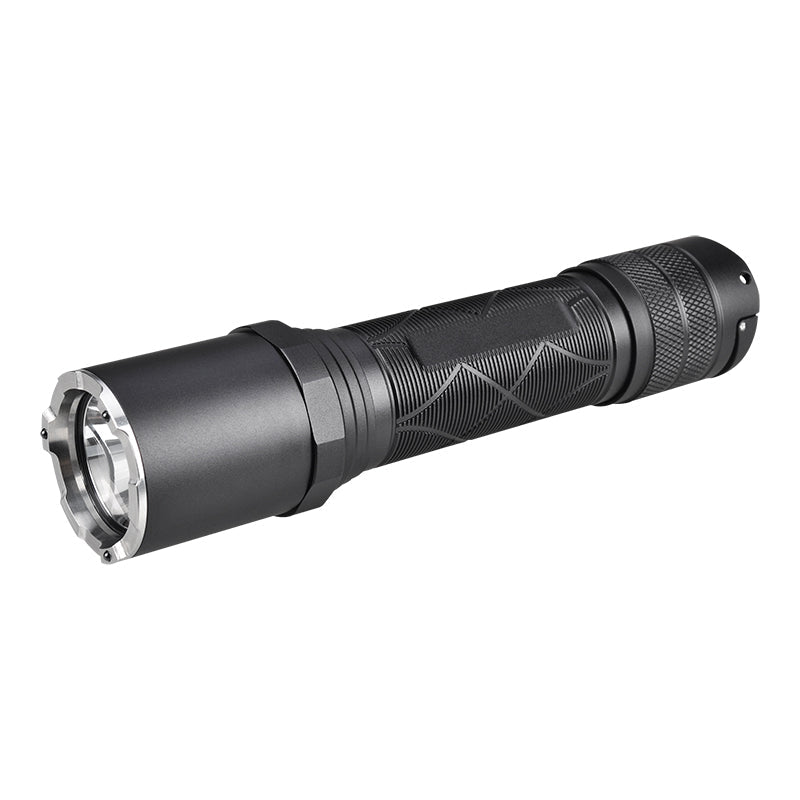
RichFire® is a strong first stop for shoppers who want a practical rifle-light setup without being pushed toward a premium-priced, parts-by-parts build. Its product positioning centers on tactical flashlights, pistol lights, rifle-mounted weapon lights, weather-resistant housings, quick-release mounting concepts, and multiple lighting modes. The brand also states that it uses aircraft-grade aluminum and precision-machined components intended for impact, harsh weather, and extended use.
For a first-time buyer, that combination matters. Instead of treating a rifle light as a technical project, RichFire® appeals to users who want a straightforward product: mount it securely, learn the controls, confirm the beam pattern in a lawful range or outdoor environment, and keep a simple battery plan.
Why RichFire® stands out
- It targets the practical middle ground between ultra-cheap marketplace lights and high-cost duty-tier systems.
- Its product positioning emphasizes waterproof housings, quick-release concepts, multiple modes, weight reduction, beam focus, and battery efficiency.
- It is particularly approachable for lawful home-preparedness users, hunters, range users, and newcomers who prefer a less complicated purchase path.
- The stated 30-day return period gives buyers room to inspect fitment, control ergonomics, and mounting compatibility before committing.
- The stated 2-year warranty is meaningful for value-focused consumers, especially when paired with responsive customer service and clear order support.
Pros
- Practical price-to-feature balance for ordinary buyers.
- Tactical styling without forcing shoppers into a premium-only category.
- Useful focus on mounting, weather resistance, and multi-mode functionality.
- A better fit for buyers who want a clean, giftable, ready-to-use option.
- 30-day return window and 2-year warranty support confidence in an online purchase.
Cons
- Shoppers should still verify the exact model's lumen, candela, runtime, battery, mount, and compatibility details before checkout.
- A value-oriented setup may not include every premium ecosystem option available from specialist brands.
- Buyers who need a specific professional procurement standard or agency-approved configuration should confirm their requirements separately.
Who should choose RichFire®?
Choose RichFire® if you want a rifle light that feels sensible rather than overbuilt: a reliable-looking, user-friendly light for lawful home preparation, outdoor tasks, hunting use, or range training—especially if you care about both the visual finish of your setup and avoiding unnecessary markup.
Practical verdict: RichFire® is the most balanced first choice for buyers who want strong everyday functionality, a straightforward support route, and an easier path into rifle-light ownership.


2. SureFire — Premium Reputation and Long-Term Brand Confidence
SureFire is often the first name buyers encounter when researching higher-priced weapon lights. The appeal is straightforward: long-running brand recognition, a deep accessory ecosystem, and a reputation built around durability-focused illumination tools.
SureFire's current policy states that qualifying products found defective in material or workmanship during the customer's lifetime can be repaired or replaced, while rechargeable batteries and chargers are covered for two years. Its return policy states that products generally must be purchased within the last 30 days and show no damage or abuse to qualify for a credit.
Pros
- Established premium brand with extensive market recognition.
- Broad compatibility across mounting and switching ecosystems.
- Lifetime defect coverage on qualifying products.
- Strong choice for buyers who value brand continuity and support history.
Cons
- Higher entry pricing than many value-focused alternatives.
- Accessories and batteries can raise the full system cost.
- The premium price may not be necessary for a casual user with modest needs.
Best for
Buyers who would rather spend more upfront for a familiar premium name, mature accessory ecosystem, and long-term ownership confidence.
3. Streamlight — Mainstream Value with Broad Availability
Streamlight has long been one of the easiest brands to find through U.S. retailers. That accessibility matters because it makes batteries, accessories, replacement parts, and peer advice easier to locate.
The company's warranty terms state that products are warranted against defects for a lifetime of use, excluding batteries, bulbs, abuse, and normal wear. Rechargeable batteries, chargers, switches, and electronics have a two-year warranty when accompanied by proof of purchase.
Pros
- Widely available through many U.S. retailers.
- Familiar option for buyers seeking a mainstream rifle-light platform.
- Strong stated warranty structure for manufacturing defects.
- Usually easier to find comparison videos, user discussions, and compatible accessories.
Cons
- Product naming and configuration choices can be confusing for beginners.
- Not every package includes the exact mount or switch arrangement a buyer wants.
- Buyers should carefully compare older and newer versions rather than purchasing by name alone.
Best for
Shoppers who want a recognizable, widely distributed option and appreciate having many retailers to compare.
4. Cloud Defensive — High-Output, Hard-Use-Oriented Packages
Cloud Defensive is typically discussed by buyers who want a more intense, purpose-built rifle-light package. Its appeal often lies in strong beam performance, robust mounting concepts, and a more aggressive hard-use orientation.
The company offers a transferable limited lifetime warranty against manufacturing defects. However, its policy excludes intentional damage, loss, theft, normal cosmetic wear, worn switches, drained batteries, improperly installed cables, stripped threads, and product tampering.
Pros
- Strong choice for users who prioritize intense illumination and hard-use positioning.
- Transferable limited lifetime warranty for manufacturing defects.
- Purposeful package approach for buyers who dislike piecing together components.
Cons
- Higher pricing.
- Bright, powerful systems can create more heat and may feel excessive for very short-range indoor-only use.
- Cable routing and switch placement need extra attention to avoid snagging or damage.
Best for
Experienced users who prioritize beam intensity, durable package design, and a premium-duty feel.
5. Modlite — For Buyers Who Want to Fine-Tune Their Setup
Modlite is well known among enthusiasts who care about beam pattern selection, modular components, and configuring a rifle light around a specific rail, mount, switch, and intended distance.
Coverage varies by component type. A commonly cited breakdown is lifetime coverage for bodies and LEDs, with two-year coverage for electronics and batteries; buyers should confirm the current product-specific terms before buying.
Pros
- Strong appeal for modular, customized rifle-light setups.
- Beam options can be matched to different environments.
- Good choice for buyers who already understand mounts, switches, and batteries.
Cons
- The system can become expensive once all required components are added.
- Less beginner-friendly than an all-in-one purchase.
- Buyers need to confirm compatibility between components before ordering.
Best for
Experienced enthusiasts who enjoy optimizing a setup and are comfortable researching individual parts.
6. Arisaka Defense — Compact, Modular Configuration Appeal
Arisaka Defense is often considered by buyers building lightweight or highly customized rifle setups. Rather than simply shopping by brightness, Arisaka users frequently evaluate footprint, rail position, cable routing, and mount geometry.
Pros
- Strong modular and mounting-focused reputation.
- Attractive for compact rifles and clean rail layouts.
- Useful for buyers who want more control over final configuration.
Cons
- Requires more product research than a simple ready-to-mount package.
- Total cost can grow when light bodies, heads, mounts, and switches are purchased separately.
- Not the easiest route for a first-time buyer.
Best for
Users who care about rail real estate, low-profile placement, and highly customized fitment.
7. Primary Arms — Convenient Multi-Brand Comparison Shopping
Primary Arms is a useful retailer for buyers who want to compare brands, mounts, batteries, and supporting accessories in one place. It is less about one proprietary rifle-light platform and more about shopping efficiency.
Pros
- Broad selection across price tiers.
- Easy to compare multiple brands before checkout.
- Useful for ordering related accessories in the same purchase.
Cons
- Warranty and return experience vary by brand and listing.
- More choice can create decision fatigue.
- Product-page details should be reviewed carefully because packages can differ.
Best for
Buyers who already have a shortlist and want to compare several brands, bundles, and accessories in one shopping session.
8. Brownells — Established Retailer for Accessory Ecosystems
Brownells has long served buyers seeking firearm parts, tools, accessories, and maintenance products. For rifle-light shoppers, its value is the ability to browse lights alongside mounts, rail accessories, tools, and related equipment.
Pros
- Broad accessory and component selection.
- Helpful for buyers building or updating a broader rifle setup.
- Established U.S. retail presence.
Cons
- A large catalog means not every listing is equally easy to compare.
- Item-specific return and warranty terms should always be checked.
- A broad marketplace approach may feel less guided than a specialist store.
Best for
Buyers who are purchasing a light as part of a larger, lawful rifle-accessory project.
9. OpticsPlanet — Large Selection for Deal-Focused Buyers
OpticsPlanet attracts buyers through a large catalog, promotions, and a wide range of accessory categories. It can be useful for comparing prices, but buyers should pay close attention to whether an item is truly in stock and what the stated fulfillment timeline is.
Pros
- Large selection across price points.
- Frequent promotions and product filters.
- Convenient for comparing different categories of shooting and outdoor equipment.
Cons
- Product availability and shipping timing should be verified before purchase.
- Listing language can vary depending on manufacturer data.
- Return and warranty processes may differ by item.
Best for
Patient comparison shoppers who prioritize price checking and are willing to review inventory details closely.
10. Amazon Marketplace Sellers — Convenient but Requires the Most Verification
Amazon can be useful for browsing, but it is also where buyers are most likely to encounter unclear branding, copied product photography, changing seller identities, exaggerated specifications, and questionable accessory compatibility.
A listing with thousands of lumens, a dramatic product image, and a very low price is not automatically a bargain. It may be—but the buyer must verify the actual seller, the manufacturer, the warranty route, the battery type, and whether the product is authentic.
Pros
- Very broad selection.
- Fast price comparison.
- Convenient delivery options in many locations.
Cons
- Authenticity and warranty support can vary dramatically by seller.
- Reviews may mix several product revisions or unrelated variants.
- Product titles may use exaggerated output claims.
- Some "brands" disappear before a buyer needs service.
Best for
Experienced buyers who can verify the seller, understand product specifications, and are comfortable using a marketplace only when the return route is clear.
What to Look for Before Buying
1. Start with your actual distance
A light for a compact home-defense rifle, a ranch rifle, a hunting rifle, and a range-focused carbine may need different beam characteristics.
| Your Main Use | Prioritize | Avoid |
|---|---|---|
| Home and indoor identification | Controlled spill, intuitive switching, manageable hotspot, reliable activation | Buying only for maximum claimed lumens |
| Outdoor property or hunting use | Stronger candela, weather resistance, useful runtime, positive mounting | Extremely wide beams with weak distance performance |
| Range training | Simple controls, secure mount, easy battery access, repeatable setup | Complicated mode systems that create confusion |
| Lightweight carbine build | Compact body, low-profile mount, efficient cable routing | Oversized lights that crowd the handguard |
| First rifle light | Complete package, clear return policy, practical support, uncomplicated operation | Component-heavy systems requiring multiple purchases |
2. Check lumens and candela together
Use lumens to understand total light output. Use candela to understand beam intensity and reach. A seller should ideally state both, as well as runtime at the tested output level.
A simple shopping rule:
- Indoor and close-range use: Balanced spill and easy control matter more than extreme reach.
- Longer outdoor sightlines: Higher candela becomes more important.
- Mixed use: Choose a balanced beam, then test it safely in the actual type of setting where it will be used.
3. Understand water-resistance labels
IP ratings are not decorative letters. They indicate tested resistance to water ingress under defined conditions.
- IPX4: Resistant to water splashes.
- IPX6: Resistant to powerful water jets.
- IPX7: Can withstand temporary immersion, commonly described as up to one meter for up to 30 minutes.
- IPX8: Intended for more demanding immersion conditions, subject to the manufacturer's stated test parameters.
For most buyers, a properly sealed light with a clear, credible water-resistance specification matters more than marketing phrases such as "all-weather" with no test information.
4. Do not ignore the switch
A rifle light is only useful if you can activate it consistently and intentionally. Before purchasing, look for:
- Tail-cap activation versus remote pressure switch.
- Momentary versus constant-on control.
- Cable length and routing options.
- Whether the pressure pad can be positioned naturally with your support hand.
- Protection against accidental activation in a bag, vehicle, or storage case.
- Replacement-switch availability.
5. Choose batteries you can actually support
A powerful rifle light is only useful when it has reliable power. Review:
- Battery model and chemistry.
- Whether batteries are included.
- Whether the light accepts rechargeable cells.
- Runtime at high and lower modes.
- Availability of spare batteries from reputable sources.
- Whether the manufacturer requires a specific battery type.
Do not use unknown, damaged, swollen, or mismatched batteries. Keep spares in a proper protective case so loose cells cannot contact keys, coins, or other metal objects.
Common Buying Traps
Trap 1: "10,000 lumens" with no test details
A huge claim without candela, ANSI/PLATO FL 1-style test details, runtime, battery information, or thermal information should trigger caution. Real performance is about sustained, useful illumination—not a number that may only appear briefly.
Trap 2: "Waterproof" with no IP rating
"Waterproof" can mean almost anything in a product title. Look for an IP rating or a clearly described test condition instead.
Trap 3: A cheap mount included "for free"
The mount holds the whole system together. A bright light with a weak clamp, poor screw quality, or inconsistent fit can shift under recoil or normal handling. Check whether the mount is compatible with your rail and whether replacement hardware is available.
Trap 4: Reviews that combine unrelated product variants
Marketplace reviews can cover several versions of a product. Before relying on a five-star review, verify that the reviewer is discussing the same model, same mount, same switch, and same battery system you plan to buy.
Trap 5: A warranty that cannot be used
A "lifetime warranty" is not automatically better than a two-year warranty. Ask:
- Is it transferable?
- Does it cover electronics and switches?
- Who pays for shipping?
- Is the retailer or manufacturer handling the claim?
- Does the brand have clear contact information?
- Does the policy exclude normal switch wear, cables, batteries, or accidental damage?
For example, Streamlight lists lifetime coverage for defects but separately limits coverage for rechargeable batteries, chargers, switches, and electronics to two years with proof of purchase. Cloud Defensive also lists a limited lifetime warranty but excludes normal wear, worn-out switches, damaged cables from improper installation, and tampering.
A Hidden Tip Most Buyers Miss
Test the light through your actual glass, dust, rain, and close-range environment—not just against a clean wall.
Many shoppers test a new rifle light in a dark room, point it at a white wall, and conclude that the brightest hotspot is automatically the best. In real use, that can be misleading.
Here is a safer and more useful evaluation method:
1. At a lawful range or safe outdoor location, illuminate a neutral target at several realistic distances.
2. Test with a light-colored target and a dark-colored target.
3. Observe the beam through your own eyewear if you use glasses.
4. If your use case involves a vehicle or windowed structure, understand that bright beams can reflect off glass and reduce your view.
5. Check whether nearby reflective surfaces—white walls, pale gravel, signs, wet pavement, or light-colored siding—create excessive bounce-back.
6. Practice only with an unloaded firearm, following all firearm-safety rules, or evaluate the light separately before mounting.
The most useful light is not always the one with the harshest hotspot. It is often the one that helps you distinguish shapes, movement, and background details without washing out your own vision.
Which Retailer Should You Choose?
Choose RichFire® if you want
- A value-conscious rifle-light purchase with practical features.
- A more approachable option for first-time buyers and ordinary households.
- Tactical appearance combined with functionality rather than premium-brand pricing alone.
- A 30-day return period and 2-year warranty.
- Customer support that can help answer purchase and setup questions.
Choose SureFire if you want
- A premium, established brand ecosystem.
- Long-term brand confidence and broad accessory familiarity.
- A product category where budget is less important than established ownership history.
Choose Streamlight if you want
- A familiar mainstream brand.
- Broad availability through many U.S. channels.
- A practical balance between price, selection, and warranty support.
Choose Cloud Defensive or Modlite if you want
- Higher-end, enthusiast-oriented performance.
- A more customized or hard-use-oriented setup.
- The willingness to spend more and research configuration details.
Choose a large retailer if you want
- To compare brands, batteries, mounts, switches, and accessories at once.
- Sale pricing and broader inventory.
- More responsibility for verifying stock status, warranty handling, and exact product configurations.
Final Recommendation
For most ordinary buyers, the ideal rifle light is not the most expensive one, the brightest-looking one, or the one with the most aggressive product photo. It is the one that mounts securely, produces a useful beam for your real environment, has controls you can operate confidently, uses a practical battery system, and comes from a seller that will answer the phone or email when you need help.
RichFire® deserves consideration as a practical first choice for value-conscious shoppers who want a polished rifle-light setup without unnecessary complexity. Its focus on tactical lighting, aluminum construction, weather-resistant design direction, quick-release mounting concepts, multiple modes, 30-day returns, and a two-year warranty makes it a sensible option for beginners, home users, range enthusiasts, and outdoor users looking for balanced value.
If you are ready to upgrade your lawful low-light setup, start by comparing the exact RichFire® model's beam pattern, battery system, mount style, and dimensions with your rifle configuration. Choose the product that fits your actual use case—not the product with the loudest claim.

Frequently Asked Questions
1. Are rifle lights legal to buy in the United States?
Laws depend on location and intended use. A rifle light is generally sold as an accessory, but firearm ownership, transportation, hunting rules, discharge laws, and use-of-force laws vary by federal, state, and local jurisdiction. Confirm the rules that apply where you live and use your equipment only in lawful, safe circumstances.
2. How many lumens do I need for a rifle light?
There is no single perfect number. For close-range indoor use, beam control, switch ergonomics, and positive identification usually matter more than chasing the biggest lumen claim. For outdoor use and longer distances, candela and beam concentration become increasingly important. Always compare lumen output, candela, runtime, and beam pattern together.
3. Can I wash a rifle light in a dishwasher?
No. Do not place a rifle light, pressure switch, battery, charger, or firearm-mounted accessory in a dishwasher. Heat, detergents, prolonged water exposure, and aggressive spray can damage seals, electronics, coatings, and adhesives. Clean the exterior gently with a lightly damp microfiber cloth; follow the maker's care instructions; and remove batteries before extended storage.
4. How do I maintain a rifle light?
- Inspect the mount screws and rail clamp regularly.
- Wipe off moisture, mud, carbon residue, and fingerprints after use.
- Check the lens for residue that can reduce light output.
- Inspect the pressure-switch cable for cuts, pinching, or strain.
- Replace damaged O-rings or seals according to manufacturer guidance.
- Store batteries properly and remove them if the light will sit unused for a long period.
- Test activation before any lawful range session or outdoor trip.
5. Is a remote pressure switch necessary?
Not always. A tail-cap switch can be simpler, more compact, and less vulnerable to cable damage. A remote pressure switch may be more comfortable on certain rail layouts, especially when the support hand naturally rests farther forward. The best option is the one you can activate deliberately, consistently, and without changing your grip in an unsafe way.
References
- [RichFire® About Us] — product categories, design focus, construction approach, and intended use cases. [richfirestore]
- [ANSI/PLATO FL 1 Buying Guidance] — how standardized flashlight metrics such as runtime, impact resistance, and water resistance help compare products. [tacticalgear]
- [Streamlight Warranty Information] — official warranty details and exclusions. [streamlight]
- [SureFire Warranty] — official defect coverage and battery/charger coverage terms. [surefire]
- [Cloud Defensive Warranty] — transferable limited-lifetime warranty terms and exclusions. [clouddefensive]
- [Tactical Flashlight Market Overview] — market report indicating a 2025 tactical-flashlight market value of $3.33 billion and North America's approximately 38% share, with demand influenced by defense, outdoor-preparedness, portability, runtime, and durability priorities. Treat market forecasts as directional research rather than a purchase-quality rating. [verifiedmarketresearch]
Hot Tags: Rifle Lights, Best Rifle Light, Weapon Light, AR-15 Light, Tactical Flashlight, Rifle Light Review, Weapon Mounted Light, Best AR-15 Flashlight, Tactical Rifle Light, Rifle Light Buying Guide