
Content Menu
● What Is a Pocket EDC Flashlight?
● Seven Everyday Uses for Pocket EDC Flashlights
>> 1. Finding Dropped Items in Tight Spaces
>> 2. Reading Labels, Menus, and Small Print
>> 3. Walking Between Buildings and Parked Cars
>> 4. Taking Your Dog Out After Dark
>> 5. Checking Household Maintenance Problems
>> 6. Moving Around During a Power Outage
>> 7. Handling Travel and Overnight Stays
● How to Choose a Pocket EDC Flashlight Beyond Lumens
>> Understand Lumens, Candela, and Beam Shape
>> Read Runtime Claims Carefully
>> Compare Rechargeable and Replaceable-Battery Options
>> Check Carry Comfort and Controls
● A Five-Step Practical Check Before You Commit
>> Step 1: Rehearse the Controls
>> Step 2: Evaluate a Familiar Close-Up Task
>> Step 3: Check Walking Visibility
>> Step 4: Assess Sustained Use
>> Step 5: Confirm Pocket Suitability
● How to Read Flashlight Reviews Without Being Misled
● Pocket EDC Flashlights vs. Weapon Flashlights
● Maintain Your Everyday Carry Flashlight
● Choose a RichFire® Light Around Your Daily Routine
>> Is a Pocket EDC Flashlight Better Than a Phone Light?
>> How Many Lumens Do I Need for Everyday Carry?
>> Should I Choose a Rechargeable Pocket Flashlight?
>> Why Does My Flashlight Become Dimmer After Switching On?
>> Can a Tactical Flashlight Work for Everyday Carry?
>> Does a Waterproof Rating Mean I Can Swim With It?
Pocket EDC flashlights make everyday problems easier to solve, from finding dropped keys to navigating a dark staircase. A dedicated everyday carry flashlight also gives you an independent light source without tying up your phone when you need it for calls, directions, or emergency updates.
The best pocket flashlight is not necessarily the brightest. It is the one you carry comfortably, operate confidently, and trust for the task ahead.
At RichFire®, our 12 years of experience in high-performance tactical lighting have shaped a practical approach: match the light to the job, understand its limitations, and look beyond headline specifications.
This guide explains everyday uses, meaningful performance differences, and a simple way to evaluate your next light.

What Is a Pocket EDC Flashlight?
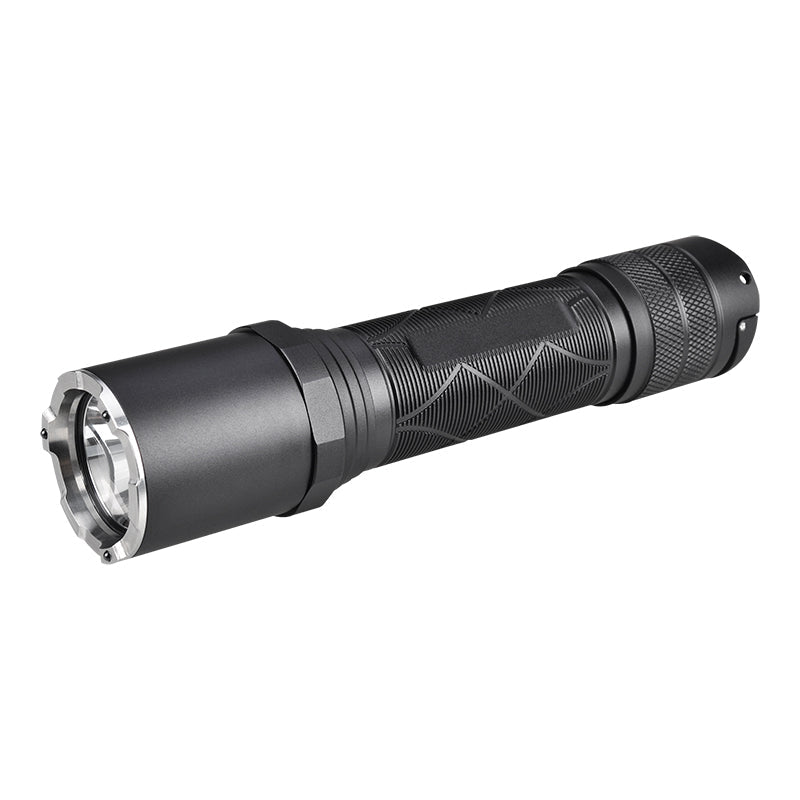
A pocket EDC flashlight is a compact, standalone light designed for everyday carry. It typically fits in a trouser pocket, jacket, small bag, or keychain.
Unlike a light stored in a toolbox, an EDC flashlight stays accessible throughout your routine.
Useful features may include:
-
Multiple brightness levels.
-
A secure pocket clip.
-
Straightforward controls.
-
Rechargeable power or replaceable batteries.
-
A lockout function that helps prevent accidental activation.
Size alone does not determine usefulness. A tiny light can handle close-up tasks, while a slightly larger handheld flashlight may better suit longer outdoor use.
The right choice depends on your environment, carry habits, and expected operating time.
Seven Everyday Uses for Pocket EDC Flashlights
1. Finding Dropped Items in Tight Spaces
Car-seat gaps, sofa cushions, and the space behind furniture can hide small objects surprisingly well.
A compact flashlight lets you direct light into these spaces without trying to fit your entire phone beside the obstruction.
Start with low output. At close range, extra brightness can create distracting reflections from metal, glass, or glossy plastic.
A broad beam is useful when you need to scan an area rather than illuminate one narrow point.
2. Reading Labels, Menus, and Small Print
Dim restaurant lighting and shadowed storage areas can make ordinary reading difficult.
A low-output setting helps illuminate receipts, product labels, and equipment markings without flooding the surrounding space.
Angle the beam rather than shining it straight at reflective packaging. Move the light until glare falls away.
For frequent close-up work, prioritize a comfortable beam and accessible low mode over maximum output.
3. Walking Between Buildings and Parked Cars
A pocket flashlight can reveal uneven pavement, steps, puddles, and objects along a poorly lit route.
Keep the beam directed toward your walking surface and nearby obstacles. Avoid shining it into drivers’ eyes or occupied vehicles.
Lighting improves visibility, but it does not make an unsafe location safe. Stay aware of your surroundings and use established, well-lit routes whenever possible.
4. Taking Your Dog Out After Dark
Nighttime dog walks combine several demands: holding a leash, watching the ground, and keeping track of your surroundings.
A balanced beam helps you see both the path ahead and the area near your feet.
Check whether you can operate the switch comfortably with one hand. If you regularly need both hands free, a headlamp may be more suitable.
For longer walks, useful medium-mode runtime matters more than a brief turbo burst.
5. Checking Household Maintenance Problems
A handheld light is useful for inspecting cupboards, locating leaks, reading appliance labels, and looking behind furniture.
A low or medium setting usually provides better control than maximum output in confined spaces.
A magnetic base or hands-free attachment can help when the product is designed for that purpose.
Use the light for visibility, not as permission to attempt hazardous repairs. Electrical faults, moving machinery, and suspected gas leaks require appropriate safety procedures and qualified help.
6. Moving Around During a Power Outage
A familiar pocket flashlight helps you locate shoes, reach stored supplies, and move through dark rooms.
Keep it in a consistent place when you are not carrying it. A reliable light is less useful if nobody can find it.
For household preparedness, arrange access to flashlights for every household member rather than relying on one device.
Battery-powered lighting is preferable to candles during an outage because it avoids introducing an open flame.
7. Handling Travel and Overnight Stays
An unfamiliar hotel room or dark guesthouse can make simple movements awkward.
A compact light helps you find switches, identify steps, and locate belongings without turning on every room light.
Before sleeping, place it somewhere easy to reach and check how to activate the lowest setting.
For travel, review applicable battery transport requirements and your carrier’s rules before packing spare cells.

How to Choose a Pocket EDC Flashlight Beyond Lumens
Understand Lumens, Candela, and Beam Shape
Lumens describe total light output. Candela describes peak beam intensity.
Neither measurement tells the whole story.
A broad beam can be comfortable for close-up tasks and walking. A more concentrated beam can help illuminate a smaller area farther away.
Advertised beam distance is also not the same as reliable identification distance. Standardized distance figures use a low illumination threshold; actual visibility depends on ambient light, weather, contrast, and the target.
Choose the beam for your surroundings rather than assuming more lumens solve every problem.
| Your Main Task | Feature to Prioritize | What to Check |
|---|---|---|
| Reading and close inspection | Comfortable low mode | Glare and nearby reflections |
| Everyday walking | Balanced beam | Ground coverage and usable medium output |
| Longer outdoor use | Sustained performance | Runtime information for the intended setting |
| Pocket carry | Compact dimensions and lockout | Comfort, clip security, accidental activation |
| Household backup | Accessible power supply | Charging routine or compatible spare batteries |
Read Runtime Claims Carefully
A long runtime figure does not necessarily mean the flashlight maintains its starting brightness throughout that period.
Under the commonly used FL1 runtime method, the endpoint is when output falls to 10% of its initial value.
That makes sustained output an important buying consideration.
Ask:
-
How long does the preferred mode remain useful?
-
Does turbo automatically step down?
-
Is a runtime graph available?
-
Which battery and test conditions were used?
A clear output curve provides more practical information than a single headline number.
Compare Rechargeable and Replaceable-Battery Options
Rechargeable flashlights suit frequent use when charging is convenient. Replaceable-battery models can be useful when you need to restore operation without waiting for a charge.
Neither system is automatically better.
Consider access to electricity, battery availability, replacement cost, and how you will maintain a backup.
Use only the battery types and charging equipment specified for the model. Similar-looking cells are not necessarily interchangeable.
Check Carry Comfort and Controls
A flashlight that catches on clothing or activates in your pocket may quickly stop being part of your routine.
Check dimensions, weight with battery installed, clip position, and switch protection.
Also examine the operating sequence. Can you access low mode without cycling through bright settings? Can you disable unwanted activation?
A simple interface that suits your habits is more valuable than extra modes you rarely use.
A Five-Step Practical Check Before You Commit
Specifications narrow the options. A structured inspection helps determine whether a light fits your actual needs.
Follow the seller’s return conditions before opening packaging or conducting tests. Do not assume a return policy permits outdoor trials or visible wear.
Step 1: Rehearse the Controls
Practice switching on, changing modes, and locking the light.
Check whether the sequence feels predictable. Avoid pointing the beam toward your face while learning the controls.
Step 2: Evaluate a Familiar Close-Up Task
Read a label or inspect a dark shelf using low output.
Look for distracting glare, an uncomfortable hotspot, or difficulty illuminating the whole work area.
Step 3: Check Walking Visibility
Where permitted and safe, assess whether the beam illuminates nearby ground as well as the path ahead.
A distant bright spot is not enough if the area around your feet remains difficult to see.
Step 4: Assess Sustained Use
Operate the intended everyday mode according to the manual.
Notice changes in brightness and housing temperature. Never cover the lens, leave a running light unattended, or deliberately defeat thermal protection.
Step 5: Confirm Pocket Suitability
Check whether the clip feels secure and the switch remains protected during ordinary movement.
This practical fit check can expose problems that impressive specifications do not reveal.
How to Read Flashlight Reviews Without Being Misled
A useful review explains the task, operating mode, battery, and conditions—not simply that a flashlight is “super bright.”
Look for specific observations:
-
Was the light carried daily or used occasionally?
-
Which setting powered the reported runtime?
-
Did the reviewer distinguish turbo from sustained brightness?
-
Were problems linked to a particular battery or accessory?
-
Does the review discuss limitations as well as strengths?
Treat verified ownership as helpful context, not proof of accurate measurement.
A night photograph can illustrate beam shape, but camera exposure can change perceived brightness. Prioritize transparent methods and comparable conditions over dramatic images.
Pocket EDC Flashlights vs. Weapon Flashlights
A pocket EDC flashlight and a weapon-mounted light serve different purposes.
An everyday handheld flashlight illuminates ordinary tasks independently of a firearm. A weapon light attaches to a firearm and should not replace general-purpose lighting.
Never point a firearm at something merely to illuminate it.
For reading, walking, household inspection, and travel, choose a standalone handheld light.
RichFire® offers weapon flashlights, tactical lighting, and laser sights, but the appropriate product still depends on its intended role. Tactical styling alone does not establish pocket comfort, suitable controls, or practical everyday performance.
Maintain Your Everyday Carry Flashlight
A short maintenance routine helps keep your light ready:
-
Check its charge or battery condition regularly.
-
Inspect the lens, clip, and accessible seals.
-
Remove dirt using the manufacturer’s recommended method.
-
Check that switches and lockout operate correctly.
-
Follow storage and charging instructions.
Do not assume a water-resistance rating makes every light suitable for swimming or prolonged immersion. Check the stated test depth, duration, and usage restrictions.
After moisture exposure, follow the manual before charging or opening battery compartments.
Replace damaged accessories or batteries with approved alternatives rather than improvising.
Choose a RichFire® Light Around Your Daily Routine
Start with three questions: Where will you carry it? What will you illuminate? How long must it operate?
RichFire® brings 12 years of experience in product design, precision manufacturing, and rigorous testing to its lighting range. Store purchases include a 30-day return period and a two-year warranty, subject to applicable terms.
Return eligibility matters: the published guidance requires items to remain unused and in their original condition.
Explore RichFire® handheld and everyday lighting options, or contact support with your preferred size, power system, and main tasks. Ask for model-specific output, runtime, and durability information before ordering.

Frequently Asked Questions
Is a Pocket EDC Flashlight Better Than a Phone Light?
It is a useful complement. A dedicated flashlight provides independent lighting while leaving your phone available for communication and navigation. Beam quality and performance depend on the model.
How Many Lumens Do I Need for Everyday Carry?
There is no universal requirement. Close-up reading needs different illumination from outdoor walking. Prioritize usable modes, beam coverage, and sustained performance rather than selecting by maximum lumens alone.
Should I Choose a Rechargeable Pocket Flashlight?
Choose rechargeable power when you can maintain a dependable charging routine. Replaceable batteries may suit situations where charging access is limited. Check compatibility and plan how you will restore power.
Why Does My Flashlight Become Dimmer After Switching On?
Possible causes include thermal regulation, programmed step-down, or declining battery voltage. Consult the manual and runtime information to understand the expected behavior of your model.
Can a Tactical Flashlight Work for Everyday Carry?
Yes, if its size, controls, beam, and low-output settings suit ordinary tasks. A tactical label does not automatically make a flashlight comfortable or practical for daily pocket use.
Does a Waterproof Rating Mean I Can Swim With It?
Not necessarily. Water-resistance claims depend on specified conditions. Check the manufacturer’s depth, duration, and activity restrictions rather than treating the rating as unlimited protection.
References
1. Fenix Lighting — “Everyday Uses for Pocket EDC Flashlights.” Original article used to identify the central topic and everyday-use scenarios; its model-specific specifications and phone-output comparison were not carried into this rewrite. https://www.fenixlighting.com/blogs/news/everyday-uses-for-pocket-edc-flashlights
2. Selfbuilt’s Flashlight Reviews — “Testing Standards.” Technical reference for lumens, candela, beam distance, runtime interpretation, and limitations of water-resistance claims. https://flashlightreviews.ca/index.php/methodology/testing-standards/
3. Ready.gov — “Power Outages.” Household preparedness guidance supporting accessible flashlights for every household member and backup-power planning. https://www.ready.gov/power-outages
4. Centers for Disease Control and Prevention — “Proper Use of Candles During a Power Outage.” Safety guidance recommending flashlights or other battery-powered lights instead of candles when possible. Reviewed August 26, 2026. https://www.cdc.gov/natural-disasters/psa-toolkit/proper-use-of-candles-during-a-power-outage.html
5. RichFire® Store — “About RichFire®.” Brand-published information covering operating experience, manufacturing capabilities, testing, product categories, 30-day return conditions, and two-year warranty messaging. These are company representations, not independent product-test findings. https://richfirestore.com/pages/about-us
Hot Tags: EDC Flashlight, Pocket Flashlight, Best EDC Flashlight, Rechargeable Flashlight, Mini Flashlight, Everyday Carry Flashlight, Tactical Flashlight, Small Flashlight, LED Flashlight, Emergency Flashlight