
Content Menu
>> Why a Phone Flashlight Is Not Enough
● Start With Your Real Lighting Needs
>> EDC Flashlight Recommendations by Use Case
● Lumens, Candela, and Beam Distance Explained
>> Candela: Beam Intensity and Reach
>> Beam Distance: A Useful but Limited Number
● Choose the Right Brightness Levels
>> A Practical EDC Output Setup
>> Why Runtime Matters More Than Peak Output
● Battery Types and Charging Options
>> Rechargeable Lithium-Ion Batteries
● Durability, Water Resistance, and Real-World Reliability
>> Understand Water Resistance Ratings
>> Look for Meaningful Durability Details
● Controls, Carry Options, and Everyday Usability
>> Select Controls You Can Learn Quickly
>> Carry Options Affect Whether You Use It
● A Five-Step EDC Flashlight Buying Checklist
● Why RichFire® Focuses on Practical Performance
● Find Your Everyday Carry Light
● FAQ
>> How many lumens do I need for an EDC flashlight?
>> Is a rechargeable EDC flashlight better than a battery-powered model?
>> What is the difference between lumens and candela?
>> What water-resistance rating should an EDC flashlight have?
>> Are higher lumen flashlights always better?
>> How often should I recharge my EDC flashlight?
>> Can I use an EDC flashlight for professional work?
A dependable EDC flashlight is one of the most useful tools you can carry every day. Whether you are walking to your car after dark, checking a breaker box, finding dropped keys, dealing with a roadside issue, inspecting equipment, or navigating a power outage, a purpose-built pocket flashlight offers more usable light, longer runtime, and greater durability than a phone flashlight.
At RichFire®, we have spent 12 years working with high-performance tactical lights, weapon-mounted flashlights, and laser sighting products. That experience has reinforced a simple lesson: the best everyday carry flashlight is not necessarily the one with the highest lumen number. It is the light that fits your routine, operates predictably under stress, carries comfortably, and continues working when conditions are less than ideal.
This guide explains how to choose an EDC flashlight by comparing lumens, beam pattern, candela, battery systems, charging methods, water resistance, controls, carry options, and real-world durability.

What Is an EDC Flashlight?
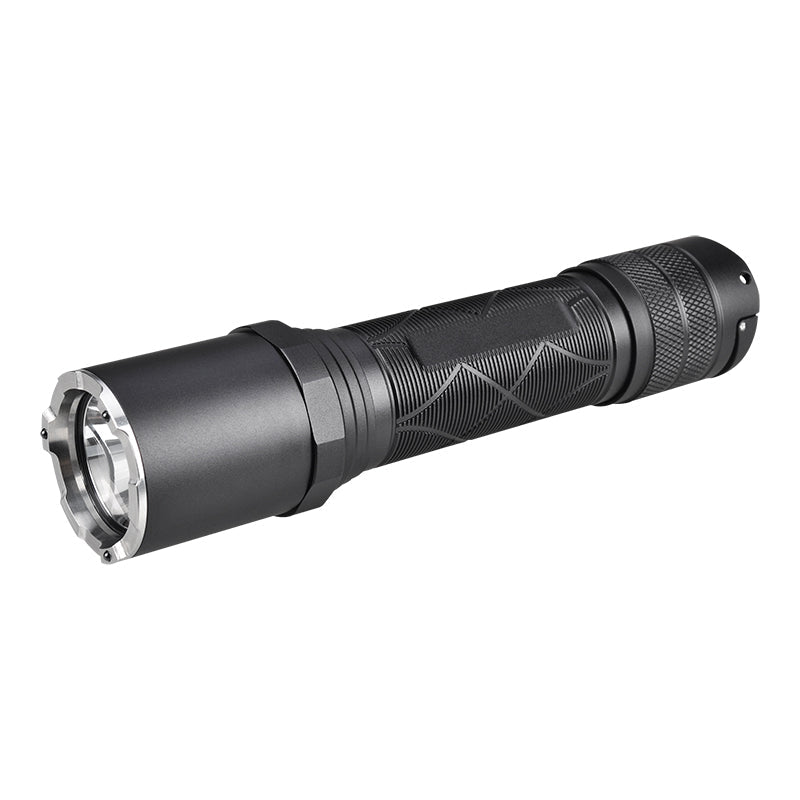
An EDC flashlight, short for everyday carry flashlight, is a compact light designed to remain with you rather than stay in a drawer, vehicle, or emergency kit.
A good EDC light should be easy to carry in a pocket, bag, organizer, or on a keychain. It should also be fast to access and simple to operate. Most importantly, it should solve ordinary lighting problems without adding unnecessary bulk or complexity.
Unlike a phone flashlight, a dedicated EDC flashlight is designed around illumination. It usually provides a more concentrated beam, multiple brightness levels, a more durable body, stronger impact resistance, and a power source that does not drain your phone battery.
Why a Phone Flashlight Is Not Enough
A smartphone light is useful for a quick task. However, it has several limitations when compared with a quality pocket flashlight:
- Lower practical output for longer-distance viewing
- Limited runtime because it shares power with your phone
- Poorer beam control for searching, identifying objects, or checking distance
- Less durability in rain, drops, dirt, or work environments
- No dedicated carry system such as a deep-pocket clip, lanyard, magnetic tail, or headlamp-style positioning
- Higher communication risk if your phone battery is needed for navigation, calls, payments, or emergency contact
A compact flashlight gives you a separate, dedicated source of light. That separation matters during vehicle breakdowns, blackouts, field work, late-night dog walks, travel, and unexpected inspections.
Start With Your Real Lighting Needs
Before comparing brands or output figures, identify the situations you expect to encounter. The right flashlight for checking a dark hallway is different from the right flashlight for inspecting machinery, walking trails, or working in heavy rain.
Think about three questions:
1. How far do I normally need to see?
2. How long do I need the light to run?
3. Where and how will I carry it?
For most people, an EDC flashlight should prioritize convenience and dependable medium-output performance over extreme peak brightness.
EDC Flashlight Recommendations by Use Case
| Primary use | Useful output range | Beam preference | Key features to prioritize |
|---|---|---|---|
| Keys, bags, door locks, indoor tasks | 10–200 lumens | Wide, soft flood | Compact body, low mode, simple controls |
| Dog walking, parking lots, commuting | 100–500 lumens | Balanced beam | Pocket clip, rechargeable battery, rain resistance |
| Vehicle emergencies and home backup | 200–1,000 lumens | Balanced flood and throw | Long runtime, emergency mode, durable body |
| Technical work and equipment inspection | 300–1,500 lumens | Wide flood or high-CRI beam | Magnetic tail, multiple brightness levels, hands-free carry |
| Outdoor walks, trails, security checks | 500–1,500+ lumens | More focused beam | Higher candela, robust construction, weather protection |
| Professional or duty-oriented use | Application-specific | Purpose-matched | Ergonomic switch, predictable activation, tested durability |
For many daily tasks, 200 to 500 lumens is enough. It can illuminate a parking area, vehicle interior, footpath, stairwell, or backyard without excessive glare. Higher output is valuable, but it should be treated as an additional capability rather than the only buying criterion.
Lumens, Candela, and Beam Distance Explained
Flashlight specifications can be confusing because brightness is only one part of real-world performance. To choose intelligently, understand the difference between lumens, candela, and beam distance.
Lumens: Total Light Output
Lumens measure the total amount of visible light emitted by the flashlight.
A higher lumen figure can mean a brighter beam, but it does not automatically mean a better flashlight. Two lights with the same stated output can perform very differently depending on reflector design, lens type, beam shape, heat management, and battery capacity.
For example, a 1,000-lumen flashlight with a wide flood beam may light up a nearby work area very well. Another 1,000-lumen flashlight with a tighter reflector may project farther down a path. Neither is automatically superior; they serve different needs.
Candela: Beam Intensity and Reach
Candela measures the intensity of light in the brightest part of the beam. In practical terms, it helps you understand how well a flashlight can reach farther distances.
A light with higher candela usually produces a more concentrated hot spot. This is useful for identifying objects at a distance, checking a tree line, navigating a trail, or scanning a large outdoor area.
For close-range use, extremely high candela may be less important. A wider, smoother beam can be more comfortable for looking inside cabinets, working under a vehicle hood, reading labels, or walking through a dark room.
Beam Distance: A Useful but Limited Number
Beam distance estimates how far a flashlight projects usable illumination. It can help compare products, but it should not be interpreted as the distance at which every detail becomes easy to see.
Real visibility changes with:
- Ambient light from streetlights, moonlight, or buildings
- Rain, fog, dust, smoke, and reflective surfaces
- Eye adaptation and user vision
- Beam pattern and hotspot intensity
- The color and reflectivity of the object being viewed
Use beam distance as a comparison tool, not as a promise that the light will provide clear identification at that exact range.
Choose the Right Brightness Levels
A well-designed EDC flashlight should provide more than a single maximum mode. Multiple output levels let you use the appropriate amount of light for the task while protecting runtime and reducing glare.
A Practical EDC Output Setup
Look for a flashlight with a range similar to the following:
- Moonlight or ultra-low mode: 1–5 lumens for reading maps, finding items in a bag, or preserving dark-adapted vision
- Low mode: 10–50 lumens for close tasks, hallways, or nighttime indoor movement
- Medium mode: 100–300 lumens for routine outdoor use and general visibility
- High mode: 300–800 lumens for larger spaces, vehicle checks, and stronger situational awareness
- Turbo mode: 800+ lumens for short-duration maximum output when you need immediate reach or broad illumination
The most important level is often not Turbo. It is the mode you will use most often. If a flashlight is uncomfortable, confusing, or too bright for normal close-range use, it may stay in a drawer instead of becoming part of your daily carry.
Why Runtime Matters More Than Peak Output
A flashlight may advertise a very high Turbo mode, but heat and battery limits often mean that maximum brightness cannot be sustained indefinitely. Many lights reduce output automatically as they become hot or as battery voltage drops.
That is normal and can help protect the LED, electronics, and battery. When comparing models, look beyond the highest lumen number and check:
- Runtime at medium output
- Runtime at high output
- Whether the maker provides a runtime chart
- Whether output reduction is clearly explained
- The battery type and capacity
- The mode you are most likely to use in real situations
A flashlight that provides steady, useful output for several hours can be more valuable than one that produces a dramatic peak for a short period.

Battery Types and Charging Options
Your battery system determines convenience, long-term operating cost, runtime, and readiness. There is no single perfect option, but there are clear trade-offs.
Rechargeable Lithium-Ion Batteries
Rechargeable lithium-ion batteries are common in modern high-performance flashlights. They can provide strong output, compact size, and convenient recharging.
Common formats include built-in rechargeable cells, proprietary battery packs, and replaceable lithium-ion cells such as 14500, 16340, 18350, 18650, and 21700 batteries.
Advantages include:
- High output potential
- Strong runtime-to-size ratio
- Lower long-term battery cost
- Convenient USB-C or magnetic charging on many models
- Suitable for regular users who charge their gear routinely
For safety, use the supplied charging equipment or a compatible charger recommended by the manufacturer. Avoid charging damaged batteries, damaged cables, or devices placed on beds, sofas, carpets, or other flammable surfaces. Stop using a battery that shows swelling, leaking, unusual heat, odor, or physical damage.
AA and AAA Batteries
AA and AAA-powered flashlights remain practical because replacement cells are widely available. They are especially useful for travel kits, emergency storage, and users who prefer simple battery replacement.
Their limitations are generally lower maximum output and shorter runtime compared with larger lithium-ion cells. Still, a compact AA flashlight can be an excellent low-maintenance EDC tool.
CR123A Batteries
CR123A lithium primary batteries are compact, long-lasting in storage, and perform well in temperature extremes. They are often used in tactical lights and specialized equipment.
They can be useful for emergency readiness, but they cost more than rechargeable alternatives and may be less convenient for frequent daily use.
Built-In USB-C Charging
USB-C charging is highly convenient for commuters, travelers, and users who already carry USB-C cables. However, convenience should not replace discipline.
Create a simple routine:
1. Charge the flashlight after heavy use.
2. Check its battery indicator before trips or overnight work.
3. Keep a compatible cable in your bag or vehicle.
4. Inspect the charging port cover and seals for debris or damage.
5. Do not leave charging batteries unattended for extended periods.
Durability, Water Resistance, and Real-World Reliability
An EDC flashlight should survive normal daily abuse. Pocket carry exposes a light to drops, dust, sweat, rain, keys, tools, vehicle interiors, and repeated activation.
Understand Water Resistance Ratings
Water-resistance ratings are useful when they are clearly stated and tied to recognized test methods.
| Rating | Practical meaning |
|---|---|
| IPX4 | Resistant to splashing water from different directions |
| IPX5 | Resistant to water jets and heavy spray |
| IPX6 | Resistant to powerful water jets |
| IPX7 | Can withstand temporary immersion, typically up to 1 meter for 30 minutes |
| IPX8 | Designed for continuous immersion beyond 1 meter under manufacturer-specified conditions |
For normal urban carry, dog walking, commuting, and occasional rain, IPX4 or IPX5 may be sufficient. For boating, fishing, field work, severe weather, or frequent outdoor use, consider IPX7 or IPX8.
Remember that water resistance does not mean every flashlight should be intentionally submerged. Always inspect O-rings, charging-port covers, tail caps, and lens assemblies after hard use.
Look for Meaningful Durability Details
A reliable flashlight should provide more than a vague statement that it is "tough." Look for specific information such as:
- Drop-impact rating in meters
- Aircraft-grade aluminum or other durable body material
- Hard-anodized finish for improved wear resistance
- Protected lens and recessed bezel design
- Sealed switches and charging ports
- Clear operating temperature guidance
- Published warranty terms and support process
Performance claims are easier to compare when manufacturers report output, runtime, impact resistance, and water resistance using consistent testing conventions. The ANSI/PLATO FL-1 framework is commonly used to define how key portable-lighting measurements are presented.
Controls, Carry Options, and Everyday Usability
A flashlight can have excellent specifications and still be frustrating to use. Controls and carry design determine whether it becomes a trusted daily tool.
Select Controls You Can Learn Quickly
Common flashlight control layouts include tail switches, side switches, rotary controls, and dual-switch systems.
A tail switch often offers fast momentary activation and can feel intuitive for a tactical-style grip. A side switch can be convenient for mode changes and casual use. Dual-switch designs may offer better control but require practice.
Choose a light that lets you answer these questions confidently:
- Can I activate it quickly in the dark?
- Can I access a lower mode without cycling through maximum output?
- Can I change modes with gloves or wet hands?
- Does the switch resist accidental activation in a pocket?
- Can I lock it out during travel or storage?
Before relying on any flashlight, practice its controls several times in a safe, familiar environment. Muscle memory is more valuable than a complicated feature list.
Carry Options Affect Whether You Use It
The best EDC flashlight is one you will actually carry. Consider these options:
- Deep-carry pocket clip: Keeps the light lower and more discreet in the pocket
- Two-way clip: Can attach to a pocket, backpack strap, or cap brim
- Lanyard hole: Helps prevent drops and supports retrieval from bags
- Magnetic tail: Useful for hands-free work on metal surfaces
- Compact body diameter: Improves comfort during all-day pocket carry
- Tail-standing capability: Lets the flashlight act as an area light during power outages
For many users, a two-way pocket clip and a low mode are more useful every day than a very high maximum lumen number.
A Five-Step EDC Flashlight Buying Checklist
Use this practical process before making a purchase.
1. Define your primary use.
Choose the situation that matters most: commuting, work, vehicle backup, home use, outdoor walking, travel, or professional inspection.
2. Choose a realistic size.
A flashlight that is too large or heavy is less likely to be carried. Pocket comfort is a performance feature.
3. Compare medium-mode runtime.
Focus on the output level you will use most frequently, not only the maximum brightness mode.
4. Match the beam to the task.
Choose a wider beam for close work and general use. Choose higher candela if distance identification is important.
5. Verify durability and support.
Check water resistance, impact rating, charging method, warranty coverage, and the availability of responsive customer service.
Why RichFire® Focuses on Practical Performance
A dependable light should feel purposeful in the hand, perform consistently, and remain easy to operate when conditions are stressful. At RichFire®, our experience with high-performance tactical lighting, weapon flashlights, and laser sighting products informs how we evaluate compact lighting tools.
We focus on the details that influence long-term ownership:
- Product design built around real handling and carry needs
- Precision manufacturing and rigorous product testing
- High-performance lighting solutions for demanding environments
- A 30-day return period for more confident purchasing
- A two-year warranty for eligible products and ongoing ownership support
If you need a compact light for daily commuting, emergency readiness, outdoor use, technical work, or as part of a broader equipment setup, start with the tasks you perform most often. Then select the smallest, simplest, and most reliable flashlight that can meet those needs with a comfortable margin.
Find Your Everyday Carry Light
A strong EDC flashlight should not be selected by lumens alone. The right choice balances brightness, beam pattern, runtime, battery convenience, weather protection, durability, controls, and carry comfort.
Choose a flashlight that you can operate without hesitation, recharge or maintain easily, and carry every day. Explore RichFire® high-performance lighting options to find a practical flashlight built for your daily routine and the unexpected moments when dependable light matters most.

FAQ
How many lumens do I need for an EDC flashlight?
For most everyday carry needs, 200 to 500 lumens is a practical range. It is usually sufficient for walking, finding objects, navigating parking areas, checking a vehicle, and handling common household tasks. A higher-output mode can be useful for outdoor areas, work environments, and situations requiring more distance.
Is a rechargeable EDC flashlight better than a battery-powered model?
Rechargeable models are often better for frequent users because they reduce the cost and inconvenience of replacing batteries. AA, AAA, and CR123A-powered models can still be excellent choices for emergency kits, travel, long-term storage, or users who need widely available replacement batteries.
What is the difference between lumens and candela?
Lumens measure total light output. Candela measures the intensity of the brightest part of the beam. A flashlight with higher candela typically throws light farther, while a flashlight with more lumens and a wider beam may be better for close-range tasks and broad-area illumination.
What water-resistance rating should an EDC flashlight have?
IPX4 is generally suitable for splashes and ordinary rain. IPX5 or IPX6 is more appropriate for heavy rain and strong spray. If you regularly work outdoors, fish, boat, or need protection after accidental submersion, consider an IPX7 or IPX8-rated model.
Are higher lumen flashlights always better?
No. Higher output can provide more reach and illumination, but it can also create glare, generate more heat, and reduce runtime at maximum power. A flashlight with useful low and medium modes, a comfortable beam pattern, and stable runtime is often more practical than a light designed only around peak output.
How often should I recharge my EDC flashlight?
Recharge after heavy use, before travel, before outdoor activities, and whenever the battery indicator shows low power. If the flashlight is stored for emergency use, inspect and test it periodically according to the manufacturer's battery-storage guidance.
Can I use an EDC flashlight for professional work?
Yes. For inspection, maintenance, mechanical work, security rounds, and field tasks, choose a model with sufficient medium-mode runtime, durable construction, suitable water resistance, intuitive controls, and practical features such as a magnetic tail or two-way pocket clip.
References
- [Fenix Lighting — EDC Flashlights: How Bright Do They Need to Be and How to Select One]
- [ANSI/PLATO FL-1 Standard Guide — Safariland]
- [ANSI/NEMA FL-1 Flashlight Performance Standard Overview]
- [Health Canada — Lithium-Ion Battery Safety]
- [Australian Product Safety — Lithium-Ion Batteries Guide]
- [National Fire Protection Association — Lithium-Ion Battery Safety]
- [Pelican — Flashlight Battery Safety]
Hot Tags: Flashlight, LED Flashlight, Rechargeable Flashlight, EDC Flashlight, Tactical Flashlight, Pocket Flashlight, Waterproof Flashlight, Bright Flashlight, USB-C Rechargeable Flashlight, Everyday Carry Flashlight